I am currently working as an official blogger for the Glasgow Film Festival 2011, contributing reviews, previews and a festival diary. You can see the results here. Check the byline because there’s a few other people blogging as well as content from the Cineskinny festival newspaper.
Many thanks once again to Gokay Gelgec of the Sinematik website and Bill Barounis of Onar Films for invaluable background information on these films and the culture they were made in. Wherever possible, I’ve referred to the best-presented and ‘official’ versions of these films available.
Cüneyt Arkin’s spaceship manifests from one frame to the next in “Turkish Star Wars”, Dünyayı Kurtaran Adam (Çetin Inanç, 1982)
Dünyayı Kurtaran Adam AKA The Man Who Saved The World (Çetin Inanç, 1982) doesn’t make it too far past the endearingly handmade titles before it demonstrates the elements that gave it its better-known title, “Turkish Star Wars”. Edited into new Turkish scenes are newsreel clips of NASA rocket launches, instantly recognisable shots from Star Wars Episode IV: A New Hope (chopped from a print in a different aspect ratio from the rest of the Inanç‘s film – making the Death Star an odd shape), and identifiable footage from Sodom and Gomorrah (Robert Aldrich,1962) and The Seven Curses of Lodac (Bert I Gordon, 1962). The roguish leads, Cüneyt Arkin (Murat) and Aytekin Akkaya (Ali) are shown in space battle, their commitment to their performance overriding the viewer’s disbelief as projected footage from Star Wars cuts haphazardly between scenes behind them. Nobody in Lucas’ Rebellion ever had to deal with their spaceship appearing and disappearing around them, and even Luke Skywalker probably wouldn’t have dared flying backwards down the trench in the Death Star, even if it was oblong. But then daredevil Ali reckons the enemy are too sour-faced and he’d prefer “if some chicks with mini-skirts were coming”.
While the provenance of the visual effects is immediately and jarringly obvious, the soundtrack is equally dubious. The music not sourced from library stock is bastardised from an impressive array of high-profile soundtracks, including John William’s score for Raiders of the Lost Ark (The Raiders March and Chase Suite), Giorgio Moroder’s disco cover of the Battlestar Galactica theme, Ennio Morricone’s theme for the TV mini-series Moses The Lawgiver (Gianfranco De Bosio & James H Hill, 1974), music from Planet Of The Apes, Moonraker and Silent Running, and then Queen’s score for Flash Gordon – a film which also provides key sound effects. Even JS Bach’s Toccata gets a showing. Such audacious theft cannot help but overshadow the homemade costumes, mannered stunt work (particularly Arkin’s trademark trampolining) and lunatic storytelling that the film otherwise consists of, but Dünyayı Kurtaran Adam is still more entertaining than The Phantom Menace.
Such pithy comparisons have revived international interest in a peculiar sub-section of Turkish film that thrived domestically in the late 1970s and early 1980s, of which Turkish Star Wars is only one among many. There are now countless blogs and webpages dedicated to lists of bizarre and poorly-made foreign versions, some official, some not, of Hollywood films. Usually light on context and high on derision, these articles have nevertheless brought to light a whole spectacular genre that may be described as Turkish Remakesploitation.
Most of these films were made during a particularly tumultuous period for the Republic of Turkey that saw the country experience the third coup d’etat since its formation in 1923. The 1980 military coup followed coups in 1960 and 1971 and brought a temporary end to violence but also ongoing political instability that has continued to the present day, with the country engaged in a long struggle towards multi-party democracy. Contrary to some reports, there was no general ban on American films in Turkey, even during the period of the military coup (from September 1980 to November 1983) beyond the individual bans on Midnight Express (Alan Parker, 1978) and A Clockwork Orange (Stanley Kubrick, 1973). The more serious censorship affected domestic films and directors, most famously Yılmaz Güney who, in the middle of this period, orchestrated the production of Yol AKA The Way (Serif Gören, 1982) from a Turkish prison cell. One of the biggest movie stars in Turkey (of a rough and roguish type similar to Arkin), Güney was also one of the most politicised, first jailed in 1961 (for publishing an allegedly ‘communist’ novel) then again in 1972 and 1974. Escaping prison in 1981, he completed Yol in Switzerland and it went on to win the Palme D’Or at the 1982 Cannes Film Festival. Exiled in Paris, Güney died of cancer in 1984 and he is now internationally renowned as a key figure in modern Turkish cultural history.
Yılmaz Güney (middle) at the Cannes Film Festival, 1982
However, the kind of low budget oddities that decades later would become known as Turkish Jaws, Turkish Dirty Harry or Turkish Exorcist, among many others, belong in a world parallel to the politically and socially conscious filmmaking of the likes of Yılmaz Güney. Even filmmakers sometimes mentioned in the same breath as Güney took part in the Remakesploitation trend. Memduh Ün, who garnered early international notice for his film Kırık Çanaklar (The Broken Pots, 1960), also directed the Turkish James Bond rip off Altin Çocuk (Golden Boy, 1966) and, much later, Turkish Death Wish AKA Cellat (The Executioner, 1975). With the spotlight on the highly entertaining, low-budget escapism of Turkish Star Wars, it’s easy to overlook that Turkey, even in such adverse conditions, had no shortage of “respectable” films and, after a wilderness period from the early 1980s through into the 1990s, has resumed producing world-class films.
Dünyayı Kurtaran Adam is probably the most famous of the Turkish Remakesploitation films, by dint of having Star Wars as its template and because it so blatantly ripped off whole special effects shots and sequences. Truth be told, even though it cribs some broad ideas along with a bucket-load of special effects, it tells a distinctly different story than Star Wars and it is not even close to being the most thorough Rip-Off in this genre. Nor is Süpermen Dönüyor, even though Kunt Tulgar’s movie makes liberal use of stolen music cues and copyrighted characters. There are far more explicit offenders in this category, films that are practically shot-for-shot remakes of the originals. Crucially, none of them are authorised adaptations of the source material, distinguishing them from the standard and continuous back-and-forth nature of movie remaking across national borders.
Films belonging to the genre take a variety of forms, from those shot-for-shot remakes (Sevimli Frankestayn AKA Turkish Young Frankenstein (Nejat Saydam, 1975)), to straight retellings adapted for a Turkish audience (Süpermen Dönüyor, Kunt Tulgar, 1979), to films that took elements of foreign films and incorporated them into ‘reimagined’ versions of the originals (Dünyayi Kurtaran Adam). All three types regularly feature in Top Ten Terrible Foreign Rip-Offs lists, their puny budgets, brazen appropriation and lunatic energy frequently compared ironically to their muscular Hollywood forebears. The common links between them are the international fame and success of their source material and a focus on any combination of action, sex, adventure and violence – the key constituents of any so-called B-movie and bread and butter for their contemporary domestic audience. The films were broad, easy to comprehend and entertaining to a fault – so no Turkish Chinatown, but Turkish Young Frankenstein was a no-brainer.
The films that can be described as part of the classic wave of Turkish Remakesploitation also belong to a larger genre of Turkish Fantastic Cinema. This term encompasses many kinds of genre films, from horror and science fiction to the hugely popular masked hero film. B-movies by any description and obscure to say the least, these films are not widely available even in Turkey, where the original prints have long since been sold off to television stations or simply disappeared entirely. Often the best sources for viewing them are VHS copies of pre-digital Turkish television broadcasts and/or German rental copies, ripped for the internet. Luckily and somewhat miraculously, MTV Turkey has recently begun screening many of these films, previously believed to be lost altogether, in a weekly Fantastic Cinema slot. Otherwise, tiny independent companies like Onar Films, based in Greece, distribute DVD versions sourced from original prints. While these are lovingly packaged, carefully cleaned and prepared for release and much better quality than YouTube uploads, they’re hampered by the extremely poor quality of the existing prints, which never were high priorities for preservation or digital remastering.
“Turkish ET” waves goodbye in Badi (Zafer Par, 1983)
From a modern, western perspective, cataloguing and delineating these films is a nightmare, due to a number of factors. First and foremost, the lack of an international audience even at the time means that the films and filmmakers have very little status in the west. Awareness of them now is really due to some hard work by fans of the genre(s) and a whole lot of wry internet ‘appreciation’. Even now, the documentation and availability of these films is very limited, automatically granting canonical status to a handful of high-visibility Rip-Offs – Turkish Star Wars, Turkish Superman and Turkish ET (Zafer Par, 1983) among them. The films that are available, one way or another, often have sub-standard English subtitles (with no disrespect to the efforts made, for which we have to be very thankful) and most have no English subtitles at all. Additionally, there seems to be very little behind-the-scenes information available and attempts to frame these films in any kind of context are very rare. Bill Barounis of Onar Films has produced a helpful Turkish Fantastic Cinema Guide and while there are surely more scholarly tomes on the history of Turkish cinema, Fantastic or otherwise, they are, by and large, written in Turkish and in any case not widely available.
Fortunately, as the films of particular interest here have benefited from the widest modern audience, it’s still possible to discuss them in context and to trace their origins somewhat. While the key period for these films is the mid 1970s to the mid 1980s, their roots go much further back. Prior to World War II, the Turkish film industry was dominated by a handful of companies importing foreign product into the major cities of Istanbul, Izmir and Ankara. After 1948, when the municipal tax on exhibition was reduced from 75% to 25% (leaving the tax on imported films at 70%), there was an explosion in domestically produced Turkish cinema. By the mid 1960s, Turkish cinema had expanded rapidly to become one of the biggest film making economies in the world, centred around Yesilçam (literally ‘Green Pine’ and named for a street in Istanbul that housed many production companies), which became a by-word for Turkish cinema in the same sense Hollywood is for classic American film.
However, while there were over 1,000 cinemas in Turkey at the peak of this wave, Hollywood product was still limited to theatres in the major cities and the coasts, leaving the huge Anatolian population in the south at a disadvantage – which is to say, there was a huge demand for the kind of westernised product epitomised in the Western and Action genres which was not being fully catered for. Starting around 1962, the Turkish Western became a hugely popular genre with 15 films a year being produced at the peak of the genre’s popularity in the 1970s and an audience happy to consume up to three films a day. In this period, the power of the regional distributors was paramount as they could and would demand films to their own specification, according to the discriminations of their local audiences. Unfortunately, due in part to the decentralisation of the system (with hundreds of companies making films), the general tilt was towards private enterprise, meaning that profits from films were not directed back into future film production, but removed for private gain. This was essentially a cash-flow business, with the success of one film providing the budget for the next, and one that could not sustain itself under any adversity. Eventually, Yesilçam’s output became dominated by soft-core porn productions.The encroachment of television and VHS meant that cinema revenue took a dive in the late 1970s and 1980s, which, in combination with that still thirsty-for-action Southern audience, created the perfect environment for Turkish Remakesploitation to thrive, albeit briefly.
Dünyayı Kurtaran Adam speaks to the audacity of some Turkish filmmakers, but the copyright situation in Turkey then is extremely vague from a modern perspective and it seems clear that there was no pertinent law of any kind in Turkey at that point. Indeed, there was a similar approach taken to the recording of foreign songs, at least up until the 1990s. At any rate, most of the films to be made in this golden age were well under Hollywood’s radar, probably more so than even Tarzan Istanbul’da (which had attracted the attention of Hollywood lawyers), and catered to an audience that had very little access to Hollywood product. Up until this point, it was standard practice in Yesilcam to freely adapt English-language novels, scripts and movie serials. There had been numerous Turkish bootlegs of Hollywood properties like The Lone Ranger, Zorro and Flash Gordon as well as oddities like Tosun and Yosun, the Turkish Laurel and Hardy clones, and innumerable Turkish Westerns. The spirit of the classic Turkish Remakesploitation can be traced in some of those Westerns, in their enthusiastic appropriation of American Western tropes and types (in similar fashion to the Italian Spaghetti Westerns), and their giddy disregard for international copyright concerns.
Una Pistola Per Ringo (Duccio Tessari, 1965), the now-classic Spaghetti Western, spawned many unauthorised spin-offs and unofficial sequels (as indeed it did in homeland of Italy). Similarly, Django (Sergio Corbucci, 1966) soon inspired the likes of Cango Olum Suvarisi (Django Rider Of Death, Remzi Conturk, 1967). Then came Çeko (Çetin Inanç, 1970), featuring a Turkish analogue of the Spaghetti Western anti-hero. Çeko opens with music stolen from Ennio Morricone’s score for The Good, The Bad and The Ugly (Sergio Leone, 1966) and goes on to utilise his Once Upon A Time In The West (Sergio Leone, 1968) score and Riz Ortolani’s music for Day Of Anger (Tonino Valerii, 1967). Even with the relatively low budget director Inanç had at his disposal, and the hasty production schedule – which would rapidly earn him the sobriquet “Regisör Jet”, the Jet Director – it was yet more economical to plagiarise pre-existing music. There were, of course, composers at work at the industry, but they would have cost too much, even in the form of the library music that they were most frequently employed to produce. With the materials at hand in the form of worn American prints and with impatient theatre owners on the phone, representing a waiting audience, directors like Inanç could churn out cheap copies quickly and to demand.
All of which begs the uncomfortable question of why filmmakers did not simply manufacture and distribute bootleg prints. The answer is in the question, and it is because these were filmmakers and not criminals. It seems clear that these films could not exist without a certain level of raw enthusiasm for the source material, the genres they represent and the filmmaking process itself. In any case, such blatant theft could easily be considered too likely to provoke the attention of litigious Hollywood studios that, after all, were still screening their product in the major cities, though they would not have a presence in the country as distributors until the 1990s. Equally probable is that the audience responded more enthusiastically to representations of these stories through a Turkish prism, which the filmmakers were only too eager to provide. It’s presumptuous and perhaps condescending to consider that the language barrier when screening original American films was an important element, but it likely would play a part. What is more than likely is that the significant delay between the initial American release and the widespread distribution of American films – even to the extent that they reached – provided a window ripe for exploitation.
Serdar Kebapçilar, “Turkish Rambo”, in Korkusuz (Çetin Inanç, 1986)
Inanç is the most prominent behind-the-scenes character in the story of Turkish Remakesploitation. Weaned on the same comic books and serials that inspired his contemporaries Lucas and Spielberg, his first notable work was writing the screenplay for Kilink Istanbul’da (Yilmaz Atadeniz, 1967), a rip-off of Italian comic strip Killing, itself a rip-off of another called Kriminal, which was again a rip-off of Diabolik – making Kilink Istanbul’da a kind of bastard cousin to Danger: Diabolik (Mario Bava, 1968). His first film as director, Çelik Bilek (1967), was a Rip-Off of another Italian comic series, this time Il Grande Blek. After Çeko, he churned out carbon copies of Bonnie and Clyde, Dirty Harry, Mad Max, Jaws, First Blood, Rocky and Rambo II, making him by far the most prolific of the Remakesploitation directors. Those films, however, are only a sampling of the 136 films he made before moving into television in the mid 1980s. His transition then was emblematic of the general refocusing of the industry around television and its revenues in the 1980s and 1990s.
The key to understanding the films of Turkish Remakesploitation is to see them in context, not as part of a bungling criminal enterprise, but as the work of inventive, cash-strapped pragmatists. They were opportunists, certainly, but no more than Roger Corman or, indeed, any other Hollywood producer. The films were, after all, made for and enjoyed by an audience that could be described as undiscerning, but is more properly seen as enthusiastic, extremely receptive and, ultimately, forgiving, if the entertainment was worth the price of admission. There are comparisons to be drawn between Turkish Remakesplotiation and some Blaxsploitation (eg “The Black Exorcist” – Abby, William Girdler, 1974) in the way that mainstream (white, American) content is recreated but transformed to reflect the appearance and cultural specificity of the ‘niche’ audience. They’re also a worthy example of the hijacking and détournement of the Hollywood juggernaut to produce films for local consumption and, to a very limited extent, local profit. It’s hardly Robin Hood and it doesn’t beat a genuinely creative original and non-derivative industry, but it’s a lot more attractive, culturally, than simply swallowing what America doles out wholesale.
But their worth is not merely academic. And it’s not simply found in their superficial comic value, or even in their oddball energy, strange logic and generally singular approach to genre filmmaking. It’s in the spirit they were made in, the sheer will to make films overwhelming the paucity of available resources. It’s about making films of a certain kind when logic perhaps should tell you that you are not able to and not being constrained by your material limitations – certainly not when there is the prospect of expanding your material wealth. Fundamentally, Turkish Remakesploitation survives because it’s still doing what it was created to do – entertaining, even if that enjoyment sometimes takes the shape of snarky, ill-informed criticism.
Comparing the intent of Çetin Inanç and his contemporaries to their Hollywood counterparts is perhaps the most instructive measure. The cultural influences they share, taking for granted the international success of American comics and movie serials of the 1930s and 40s, seem as important as their distinct national identities. How different would the original Indiana Jones and Star Wars trilogies look if they were made with a fraction of the budget, talent pool, shooting schedule and basic infrastructure that they found in Hollywood? And though posterity has not been kind to the films of Turkish Remakesploitation, the smiles they engender and the basic thrills they offer are undiminished. As Kunt Tulgar has said, “Action and adventure never die in our culture.”
If you’re interested in these films, please support Bill Barounis at Onar Films, who has been tirelessly sourcing prints and rights for them and releasing them on DVD, with lots of extras. You can buy directly from Onar Films at their website (www.onarfilms.com). Korkusuz AKA Turkish Rambo has also been restored and redubbed as Rampage and is available from Dark Maze Studios (www.darkmaze.com/rampage).
RIP-OFF ROUND-UP: TURKISH REMAKESPLOITATION
This likely far-from-complete list encompasses the films that have been popularly designated as the “Turkish (insert name of popular Hollywood film)” that I’ve been able to track down. There are many certainly many more instances of flagrant copyright theft, brazen appropriation and general cinematic mania. Also, some of the films mentioned are part of larger series (eg Turkish Tarzan). If anyone has any suggestions to add to it or amend it, please let me know. Many of the films on the list can be found at this eBay store. The list is arranged chronologically.
Turkish Tarzan
Tarzan Istanbul’da/Tarzan In Istanbul (Orhan Atadeniz, 1952)
Turkish Laurel and Hardy
Tosun ile Yosun (Nuri Ergün, 1963)
Turkish Some Like It Hot
Fistik Gibi Masallah (Hulki Saner, 1964)
Turkish Spiderman
Örümcek Adam (Cevat Okçugil, 1966)
Turkish James Bond
Altin Çocuk/Golden Boy (Memduh Ün, 1966), Altin Çocuk Beyrut’ta/The Golden Boy In Beirut (Ertem Göreç, 1967), Mehmetçik Altin Çocuk (Yavuz Yalinkiliç, 1971)
Turkish Snow White
Pamuk Prenses Ve 7 Cuceler (Ertem Görec, 1970)
Turkish Magnificent Seven
Yedi Belalilar (Irfan Atasoy, 1970)
Turkish Wizard of Oz
Aysecik ve Sihirli Cüceler Rüyalar Ülkesinde (Tunç Basaran, 1971)
Turkish Lassie
Mavi Boncuk Lassi (Nuri Akinci, 1971)
Turkish Bonnie & Clyde
Cemo ile Cemile (Çetin Inanç, 1971)
Turkish Superman
Süper Adam Istanbul’da/Superman in Istanbul (Yavuz Yalinkiliç, 1972)
Turkish Batman
Yarasa Adam – Bedmen/Betmen Yarasa Adam (Günay Kosova, 1973)
Turkish Star Trek
Turist Ömer Uzay Yolunda (Hulki Saner, 1973)
Turkish Spiderman/Captain America/Turkish Santo
3 Dev Adam/Three Mighty Men (T Fikret Uçak, 1973)
Turkish Exorcist
Seytan (Merin Erksan, 1974)
Turkish Straw Dogs
Kartal Yuvasi (Natuk Baytan, 1974)
Turkish Death Wish
Cellat/The Executioner (Memduh Ün, 1975)
Turkish Young Frankenstein
Sevimli Frankestayn/My Friend Frankenstein (Nejat Saydam, 1975)
Turkish Hamlet
Intikam Melegi – Kadin Hamlet (Metin Erksan, 1977)
Turkish Superman
Süpermen Dönüyor/The Return of Superman (Kunt Tulgar, 1979)
Turkish I Spit On Your Grave
Intikam Kadini (Naki Yurter, 1979)
Turkish Star Wars
Dünyayi Kurtaran Adam/The Man Who Saves The World (Çetin Inanç, 1982)
Turkish Dirty Harry
Kelepçe (Çetin Inanç, 1982)
Turkish ET
Badi (Zafer Par, 1983)
Turkish Mad Max
Ölüme son Adim/Last Stop To Death (Çetin Inanç, 1983), Intikamci (Çetin Inanç, 1986)
Turkish Jaws
Çöl/The Desert (Çetin Inanç, 1983)
Turkish First Blood
Vahsi Kan (Çetin Inanç, 1983)
Turkish Woman In Red
Asik Oldum (Ertem Egilmez, 1985)
Turkish A Candle For The Devil
Vahset Kasirgasi (Kadir Akgün, 1985)
Turkish Rocky
Kara Simsek/Black Thunder (Çetin Inanç, 1985)
Turkish Rambo II
Korkusuz /Fearless (Çetin Inanç, 1986)
Sequel to Turkish Star Wars
Dunyayi Kurtaran Adam’in Oglu/Son Of The The Man Who Saves The World (Kartal Tibet, 2006)
“The idea at the time was from Fabrizio De Angelis, the producer. He called me at the time and said, “What do you think about The Bronx Warriors?” I said, “Great! Is it the next movie of Walter Hill?” “No, it’s your next movie!” I said, “Great, OK.”… The movie was inspired, for sure, of course, from Escape From New York. I watched that movie 1,000 times. And Mad Max. Mad Max for the cars, the costumes.”
Enzo G Castellari
“It’s not just westerns, not just war films – there’s a bunch of sub genres inside of those. And that’s what I like the most, are sub-genres, and then bouncing a bunch of those off of each other. And the thing is, I never want to play them straight, I always want to transcend them, I just want to use them as a jumping off point to do something else. But I don’t want them to be some pretentious, artistic, art film meditation on the genre. I want to go and do it my own way. So I want to give you the same pleasures but go to a different drummer.”
Quentin Tarantino
In his book The Story Of Film, Mark Cousins evokes both Richard Dawkins’ concept of memetics and EH Gombrich’s theory of ‘schema plus correction’ for art history to talk about the “grammar of film”, which, Cousins suggests, “grows and mutates”. Richard Dawkins first proposed the study of memetics in The Selfish Gene (1976) as a cultural parallel to genetics, where, instead of biological information, ideas are transmitted between humans, through imitation. Dawkins suggests that, as in the genetic process of evolution, for ideas/memes to survive, variation, replication and ‘fitness’ all must apply. However, Cousins, who finds Dawkins’ proposal inadequate, suggests that cinema doesn’t evolve in a standard sense – “Advancing, getting more complex, building on the past” – and that often older trends resurface, regaining popularity. He seems to suggest a certain potential circularity in cinematic trends that undermines any comparison to genetics, but perhaps this is misguided, given how young the art of filmmaking really is. Cousins goes on to suggest a twist on Gombrich’s approach, in order to find “a useful model for understanding the nature of filmic influence”, which he describes as ‘schema plus variation’. Like Gombrich, he believes that, “For an art form to evolve, original images can’t always be copied slavishly.” His focus, therefore, is on the films that “vary the schema”, break new ground and influence other films.
By definition, Cousins’ history has no room for second-generation films like 1990: I Guerrieri del Bronx (1990: The Bronx Warriors, Enzo G Castellari, 1982), but Dawkins’ proposal is particularly helpful when looking at the Rip-Off, an enterprise that, after all, is uniquely based on the replication and mutation of single, definable concepts. If cinematic properties, or aspects of them, can be considered memes (in the Dawkinsian sense, as opposed to the internet meme), then Mutant Hybrids can be considered experiments to repurpose these to create new units of culture. Therefore, the Mutant Hybrid Rip-Off is a film wherein recognisable elements of existing films are utilised to create a new one. Essentially, they are films that use other films to tell their stories. Mutant Hybrids are cinematic analogues for genetic modification and they tinker with the natural evolution of film in the manner of the experiments of the clichéd mad scientist.
Robo Vampire (1988)
Unfortunately for some, genetics is defined by survival-of-the-fittest rule and few would argue that Robo Vampire (Godfrey Ho, 1988) was ever destined to live a full and happy life, spreading its seed far and wide and begetting a rich lineage. Its infamous director enjoyed a long career taking Roger Corman’s legendarily economical production techniques to absurd lengths. Ho’s films are legendary for stitching together footage from completely unrelated films with his new, cheaply filmed footage, redubbing the dialogue and also stealing well-known music for his soundtracks. Robo Vampire not only attempts to co-opt the story and character of RoboCop (Paul Verhoeven, 1987), pitting him (see above) against strange, hopping vampires, but also stitches two seemingly unrelated films together in the process. By comparison, the non-Mutant Hybrid Star Wars is the Genghis Khan of the movie world, raping and pillaging its way across the globe, leaving an indelible mark on the landscape and stamping its DNA on the creative genes of filmmakers worldwide. It is, of course, arguable that Star Wars and its offspring may prove an evolutionary wrong-turn, but its longevity and far reaching influence have proved it ‘fit’ enough to survive in our time. The first two films of Lucas’ original trilogy have been preserved by the US Library of Congress as part of the National Film Registry – Robo Vampire and The Phantom Menace still pending.
Films classed as Rip-Offs are rarely credited with originality or influence and more often that not are considered creative dead-ends. It is arguable that many films in this category are the fairground oddities of the movie world, albeit more Freaks than The Elephant Man. Just as the popularity of the freak show aesthetic has become a niche concern, any box-office draw these movies may have enjoyed in their day has comparatively dwindled and they are effectively cordoned off in the ghetto of B-movie fetishists. However, they retain a unique appeal due to the many entertaining, bizarre and provocative elements they contain. Some of them had the potential to be the outliers but proved to be outcasts – more Johnny Eck than Professor X – instead and are genuine lost or underappreciated classics.
Cousins’ example, as exclusionary as it is, does help us to distinguish those from the likes of the Asylum’s generic (in the worst sense of the word) output. More often than not, the most interesting thing about the Asylum’s films is their covers, which promise the world and deliver ashes. The best of the Mutant Hybrids, in their virulent originality, challenge even the validity of the term “Rip-Off”, in a fashion not dissimilar to Michael Corleone’s attempts to take his family’s mob business legit. These are the movies that roam the generic no-man’s land, the muties that defy easy categorisation. In this they are the key to the intrinsic paradox of the Rip-Off – they are free to be whatever their filmmakers can possibly envision – and, of course, not all of these films and filmmakers rise successfully to that challenge – so long as they hit the bass notes of commerce and financial equilibrium. Some would argue this is the foundation of the whole B-movie culture – If it isn’t broke don’t break it; just give it a new paint job, and make sure there’s plenty of nudity and violence.
There are perhaps three delineable kinds of Mutant Hybrid Rip-Off – the more benign, Frankensteined kind that incorporate or bastardise footage from other films (see Turkish Remakesploitation of the late 1970s – mid 1980s, Hollywood Boulevard (Joe Dante, 1976), Ultra Warrior (Augusto Tamayo San Romån/Kevin Tent, 1990)), the half-breed kind that take two or more properties and marry them together (James Batman (Atemio Marquez, 1966), Emanuelle and the Last Cannibals (Joe D’Amato, 1977)) and the kind that combine discernable elements of other films to create entirely new, meta-textual monsters. In this latter category belong the likes of The Mighty Peking Man (Ho Meng-hau, 1977), the Kill Bill films (Quentin Tarantino, 2003/04) and The Ice Pirates (Stewart Raffill, 1984). Shaun of the Dead (Edgar Wright, 2004) could also be considered one of the more famous and recent Mutant Hybrid Rip-Offs, given that it consists of a broad pastiche of George A Romero’s zombie films meshed to a romantic comedy narrative.
Few would argue Shaun of the Dead doesn’t owe a huge debt to the films of George A Romero, but its narrative is almost entirely original. Its action arguably plays out in the same cinematic world as Romero’s films, obeying their famous rules and deliberately mirroring the global events related in the originals. But few would feel comfortable condemning it a Rip-Off, given that it wears its influences so clearly on its sleeves, and the plethora of “…Of The Dead” movies that exist even beyond Romero’s canon. However, it certainly is entirely reliant on extant films for its aesthetic and narrative tropes, and operates strictly within the aforementioned Romero Rules for his zombies saga. One horror antecedent that is more of a straight-up Mutant Hybrid is Emanuelle and the Last Cannibals (Joe D’Amato, 1977), which combines the character of Emanuelle (Laura Gemser), an unauthorised Italian knock-off of the Emmanuelle series (note the extra ‘m’) with the emerging cannibal film genre.
Billy The Kid vs Dracula (1966) & Jesse James Meets Frankenstein’s Daughter (1966)
Films that repurpose footage from other films for comedic effect, the best example of which is probably Dead Men Don’t Wear Plaid (Carl Reiner, 1982), can create entirely new cohesive narratives with an intriguing mixture of integration and juxtaposition. Reiner’s film noir parody is carefully built around several clips from famous films of the 1940s. These are perhaps better considered as examples of détournement than the Mutant Hybrid. There are also many examples of films that have been redubbed in part or détourned in their entirety chiefly for comedic effect, and so do not necessarily belong in this category. A Man Called…Rainbo (David Casci, 1990) and What’s Up, Tiger Lily? (Woody Allen, 1966) are among these. There is a long history of ‘official’ hybrids ranging from the Abbot And Costello Meet… series (1948-55) to the recent AVP: Alien Vs Predator (Paul WS Anderson, 2004). Films such as these undoubtedly share some of the ulterior motives of the Mutant Hybrid – the prospect of doubling a potential audience by combining two proven properties. However, the imagination and creativity they inspire in their makers and audience is inversely proportional to their cynicism. Interesting oddities like Jesse James Meets Frankenstein’s Daughter (William Beaudine, 1966), the Wizards Of Mars (David L Hewitt, 1965) and even Forbidden Planet (Fred Wilcox, 1956), which take real life or literary characters or narratives and repurpose them are also not Movie Rip-Offs per se. Finally, films such as Delta Force Commando (Pierluigi Ciriaci, 1988), which ingeniously combines the titles of two successful films, are less often as overtly derivative of the content of those films as could be expected.
Roger Corman has a justified reputation as the King of the B’s (although he would argue semantics on the definition of B-movies) but with responsibility for almost 400 films and a reputation for thrift, it’s unsurprising that a few of his films recycled footage. His Edgar Allan Poe cycle (eight films, 1960-64) reused footage from the climax of the first, House Of Usher, several times over. Peter Bogdanovich’s Corman-produced Targets (1968) reused footage from The Terror (Roger Corman, 1963) in order to compliment and capitalise on two days work the star of latter, Boris Karloff, owed Corman. The footage was justified by casting Karloff as an aging movie star making a promotional appearance at a drive-in theatre where the action climaxes. A similar ruse was the basis for one of the definitive Frankensteined films, Hollywood Boulevard (Allan Arkush/Joe Dante, 1976). Co-director Joe Dante wrote a script based around a movie studio, allowing him and Arkush to deliver a film consisting of an absurd amount of disparate footage from Corman’s vaults. The result was more tongue-in-cheek rather grossly cynical.
Corman’s treatment of Nippon Chinbotsu (The Submersion of Japan, Shirô Moritani, 1973) a film he repurposed for the American market was arguably more so. Renaming it Tidal Wave, Corman ordered it recut and redubbed with new scenes shot starring Lorne Michaels as a UN representative in Japan. This approach to foreign films was not usual for Corman – he says it was “probably the most outrageous example of reediting a film for domestic release” – and his New World Pictures actually released many foreign and art house films untouched, opening them up to large, new audiences. The Slaughter (Michael Findlay, 1971), filmed in Argentina, was not treated as well when it was bought by producer Allan Shackleton, who tacked on scenes at the end supposedly depicting the crew of the film brutally murdering a young woman. Shackleton renamed it Snuff (1976) and promoted it as a genuine snuff film.
James Batman (1966)
There are some great examples of the Mutant Hybrid that are unfortunately obscure to the point of lost. Andy Warhol’s Batman Dracula (1964) not only ‘homaged’ the Batman serials of the 1940s and the character of Dracula, but prefigured the camp style of the 1960s Batman TV series. There was also a sequence of Filipino Batman Rip-Offs in the 1960s, which started with Alyas Batman at Robin (Paquito Toledo, 1965) and included Batman Fights Dracula (Leody M Diaz, 1967) and, most intriguingly, James Batman (Atemio Marquez, 1966), a spoof Hybrid of James Bond and Batman, where the lead actor (comedian Rodolfo Vera Quizon Sr, AKA Dolphy) played both roles. Frustratingly, beyond a couple of YouTube clips, the films are particularly hard to track down.
The opening quote above, from Enzo G Castellari (delivered in an interview for Shameless’s DVD release of his Bronx Warrior Trilogy), suggests the ease with which the decision was made to rip off Walter Hill’s iconic New York gang fable The Warriors (1979), but it also tells us much more. Firstly, the project was, as is so often the case with Rip Offs, rooted in the shark-like instincts of a producer who had smelled blood in the water. Secondly, the director was more than just aware of the original work – he was a fan. And then, wonderfully, Castellari proudly declares the influence of the other key films that shaped the classic Mutant Hybrid Rip-Off, 1990: The Bronx Warriors.
From Walter Hill’s film, he took the authentic setting (although interiors were filmed in Rome, Castellari seamlessly integrated footage shot on location in New York), the colourful aesthetic of the various gangs (the bare-chested, leather waistcoated look of the Warriors themselves, the painted faces and general incongruity of the Baseball Furies) and the antagonism between the gangs in the midst of general lawlessness. From Escape From New York (John Carpenter, 1981), he took the general plot outline – a person of importance to the ‘outside’ world (the daughter of a scheming industrialist rather than Carpenter’s President) needs rescued from the lawless, post-apocalyptic Bronx. As Castellari’s proclamation suggests, the influence of Carpenter’s film permeates his own, from the nihilistic outlook of the anti-hero, Trash (Marco Di Gregerio, billed as Mark Gregory) to the authority figures monitoring the action. From Mad Max (George Miller, 1979), well, “the cars, the costumes” pretty much sums it up, although Miller, Carpenter and Castellari all tell their bleak, anti-heroic stories in similarly dystopic settings. Peckinpah-influenced slow motion set pieces, prevalent in Castellari’s ouevre, also appear in The Warriors, particularly when the Warriors fall foul of the Lizzies (“The chicks are packed!”).
(l-r) Escape From New York (1981), 1990: The Bronx Warriors (1982)
So Castellari’s film is already notable for directly ripping off not just one but three movies. But the impressive and important thing about 1990: The Bronx Warriors is not that it steals so much from other movies, but that these elements are so well synthesised, reinterpreted and mixed with singular, original elements that the finished product demands to be judged on its own merits, even while it barely tries to conceal its various influences. The lone drummer practicing on the riverside as Trash and his biker gang arrive, Fred Williamson’s faux-noble, badass demise and Di Gregerio’s preening, effeminate machismo (which amps up Michael Beck’s performance as Swan in The Warriors to a homoerotic fever pitch) all contribute to the unique character of Castellari’s film. There were, of course, to be many post-apocalyptic, gangs roaming the wasteland films around this period (including the cycle of Italian films that 1990 is a part of), but Rip Offs are often the stepping-stone from unique, groundbreaking films to brand-new genres.
Many films quote or homage previous films, but some take the notion to the extreme. Jared Auner at Worldweirdcinema has pointed out the standard “cut and paste” approach of Bollywood to Hollywood output, where the narrative of one film can be embellished with elements of others to produce a new work. As Auner points out, Baadshah (Abbas-Mustan, 1999) broadly mimics Nick Of Time (John Badham, 1995) while incorporating elements of The Mask (Chuck Russell, 1994), Rush Hour (Brett Rather, 1998) and Mr Nice Guy (Sammo Hung, 1997).
Edgar Wright and, most famously, Quentin Tarantino (who has described Enzo G Castellari as “my maestro”), both use the visual and audio language of cinematic history as the raw material with which they stitch together their own paradoxically original work. Tarantino has said, “You could almost make an analogy that there is almost a hip hop equivalent to the way that this is sampled and that is sampled, but doing it in a cinematic way.” Although there are many examples in Tarantino’s oeuvre, the Kill Bill films probably stand as the strongest examples of his method, splicing broad generic elements of spaghetti western, Shaw Brothers-style kung fu films, anime, giallo and revenge films with specific filmic and cultural references (though Tarantino believes the extent of his use of allusion is exaggerated), all while producing work that is recognisably ‘Tarantinoesque’. That this term has not by now become redundant is a mark of his enduring talent and the wilfully blinkered vision of his detractors. Rather than go to film school, as he has been quoted, “I went to films”. The director himself makes no qualitative distinction between high and low-brow cinema while he is generally respected for his encyclopaedic knowledge of cinema history. Only in the very earliest days in his career were questions of his cinematic ‘theft’ not met with a general awareness and acceptance of the fact that Tarantino makes no effort to conceal his sources and in fact at every turn, perhaps more than any other filmmaker, encourages his audience to seek out the very films that he is ‘stealing’ from. As a sidenote, although it has not (as yet) featured in any of his films, Tarantino re-released The Mighty Peking Man (Ho Meng Hau, 1976), a Mutant Hybrid combining a King Kong-alike with a female Tarzan analogue.
So Tarantino has made a successful career creating films that freely make use of cinematic references to create original work. Many of his films can be said to rely to a greater or lesser degree on the audience’s awareness of the providence of the cinematic ‘quotes’. These can enhance the enjoyment of the films in the same sense as the first wave of modernist authors made oblique use of classical and other references to simultaneously enrich their work and also answer the widening of the general readership to include the uneducated classes. So there is a sense of exclusivity that can be read into the enjoyment of these films on that level – that you may feel flattered and included in a privileged club, the members of which can recognise and appreciate the references being made. However, in the context of popular cinema, this exclusivity is countered by the visceral, arguably even base, enjoyment of the films in question. Kill Bill is, first and foremost, a ‘roaring rampage of revenge’ and never makes any claims otherwise. As Tarantino has said,
“If you understand the context in which I’m coming from and the genres that I’m evoking and the moods and the feelings of them, well then, that’s great, now you can appreciate it in that way and that’s all good. And if you haven’t, then it’s all brand new to you and you can look at in a completely different way and now it’s got to work in a whole different way for you because you don’t understand the genre, I have to take you there myself.”
The best Mutant Hybrids display their respect and affection for the films they rip off by creating new, equivalent work that arguably can surpass the source material. They share a passion for the original work with the makers of Fan Films and similarly speak in the language of these movies. The filmmakers honour their influences by matching their creativity, inventiveness and entertainment value. Just as mankind has begun tinkering with genetic modification to interfere with natural genetic procedures, those that keep these often absurd and brilliant films alive are playing with the ‘natural selection’ of canonical film academia and even popular “all time greatest” polls to celebrate what is really possible if you throw aside conventional notions of quality, originality and legality. As the average human lifespan increases, so to does the shelf life of films previously too perverse to live.
So what is the future of the Mutant Hybrid? Tech-savvy Machinima filmmakers have already shown their willingness to use the medium of computer game engines to create narrative cinema that utilises user-controllable elements in artificial environments. Originating with short animations created with gameplay recordings of Quake (see Diary Of A Camper (Matthew Van Sickler, 1996)), Machinima has reached maturity with The Trashmaster (Mathieu Weschler, 2010), a full-length feature created solely in the artificial world of Grand Theft Auto IV. A recent (so far unsubstantiated) rumour had George Lucas gathering the likeness rights to dead actors in order to reanimate them digitally, perhaps with the aid of motion capture in James Cameron’s The Volume. In the future, modern actors (or even civilians) could ‘puppet’ long gone Hollywood icons, inserting them into modern narratives – inserting them anywhere. Sooner or later, these avatars could be as widely available and easily manipulable as any computer game character. From here, disregarding momentarily humanity’s inevitable slide into a Matrix world of digital reverie and/or star-fucking porn, these familiar skins could perform in any number of ways in any number of heretofore-impossible narratives. Like every other medium, when exposed to the catalyst/accelerant of the lawless internet, these skins and the facility to animate them will belong to everyone in the world with a laptop and the will to use them. Greedo shot first? Fuck you – it was Jar Jar on the grassy knoll beyond the cantina. Would Tom Selleck have made a superior Indiana Jones? Wonder no more. No need to wait in vain for Bronx Warriors 3: Escape From The Earth, or track down the long-lost Marco Di Gregerio to reprise Trash. Nicolas Cage will play Trash with Di Gregerio’s face. Elle Fanning will play Nicolas Cage. Nobody will remember the lessons we should have learned from Aliens Vs Predator while Alien Vs Glee distracts us momentarily from screen to flickering screen as we direct Natalie Portman and Jack Lemmon in The Apartment 2: After The Fall Of New York. In the meantime, the search for James Batman continues.
Since my last post, I’ve become aware of a much better term for what I initially referred to as Unauthorised Foreign Versions – it’s ‘Remakesploitation’. With hindsight, International Remakesploitation would have been an even better term. Even though the majority of films in this category are derived ‘illegally’ from Hollywood properties, there are certainly many cases where the original films are Italian, or Australian, or British, effectively rendering the term ‘foreign’ totally useless. In any case, the term implies a certain position of privilege, even if it was not intended to be ignorant or xenophobic. Future instalments hopefully will cover the likes of James Batman (Artemio Marquez, 1966), the Filipino hybrid spoof combining Batman and James Bond, Os Trapalhões na Guerra dos Planetas AKA Brazilian Star Wars (Adriano Stuart, 1978), and the entire booming Bollywood Rip-Off industry. At any rate, this is obviously a huge genre, but where better to start rifling through this bizarre bazaar than Turkey, home of some of the most brazen Rip-Offs in cinema history and many unforgettably odd and entertaining movies? This first part will be followed very soon by a more general look at Turkish Remakesploitation. Many thanks to Gokay Gelgec of the Sinematik website and Bill Barounis of Onar Films for invaluable background information on these films and the culture they were made in. Please forgive the long lead-in, it will hopefully become apparent why it’s there. If not, don’t worry about it too much.
“You’ll believe a man can fly.”
Tag-line for Superman (Richard Donner, 1978)
“Our Superman was a little shy. Not exactly the type for action films. He didn’t want to play in dangerous scenes. So we had to find different ways.”
Kunt Tulgar, director of Süpermen Dönüyor (1979)
In his Eisner Award-winning series, All-Star Superman, Grant Morrison described the basic Superman myth with refreshing economy – “Doomed planet. Desperate scientists. Last hope. Kindly couple.” It’s the essence of a story that was synthesised and refined from a range of elements to be the quintessential modern American myth, perfected and endlessly repeated until it entered the common consciousness. Its creators, writer Jerry Siegel and artist Joe Shuster, cherry-picked elements of successful heroes of the screen, sci-fi novel and comic book panel and mixed them in with their own cultural, generational and personal preoccupations to produce a Superman that tossed villains around with scant regard for their physical safety, deflected bullets but not bombs and leapt but could not fly. For the readership then, it was enough to make Superman a massive success.
After short-sightedly signing away the rights to their creation to people who in turn could have had no real idea how profitable they would turn out to be, Siegel and Shuster were gradually sidelined by the legal owners of Superman while countless writers and artists took their turns in updating and amending Superman’s character and back story. Alongside successive comic creative teams, radio and television writers developed the property, as it now most certainly was, adding key elements to the core story; Superman flew for the first time as a concession to TV animators who found it easier to excise the transitions necessary for an Earth-bound Man of Tomorrow. Kryptonite similarly was introduced in part to allow the star of the Superman radio show to take time off. At a certain point, Superman’s abilities became dramatically untenable – it’s tricky to consistently write believable threats for an omnipotent being – necessitating a reboot in the 1980s drastically reducing Superman’s powers.
Eventually, Siegel and Shuster were no longer even publicly acknowledged as the creators of Superman. It was only the production of Superman: The Movie (Richard Donner, 1978), with its multi-million dollar budget, that forced Warner Brothers, battered with negative publicity, to compensate the Man of Steel’s creators, now living in shaming poverty. The film was undeniably big business. With their highly-publicised case (somewhat) resolved in 1975, Siegel and Shuster could settle into their seats at the December 1978 Hollywood premiere of Superman: The Movie and see their creator credits burst across the screen.
And so, 6,000 miles away in Paris, could Kunt Tulgar. 30 years old then and away from his home in Turkey, he was watching the film with his family. As a child, Kunt Tulgar had starred in Tarzan Istanbul’da (Tarzan In Istanbul, Orhan Atadeniz, 1952), a film produced and shot by his father, Sabahattin Tulgar, who was subsequently taken to court by Tarzan’s American copyright holders. In their defence, the filmmakers produced a 50-year-old Turk named Tarzan whose name, they counter-claimed, had been stolen by the Americans and whose rights pre-dated the 32-year-old US copyright. They reportedly demanded a cheeky $10,000 compensation from the Americans and it’s probably fair to say this was a formative experience for the young Kunt. After pursuing a career as an actor, he made his directorial debut in 1974 with Tarzan Korkusuz Adam (Tarzan The Mighty Man).
Five years later, watching Richard Donner’s film in Paris, Tulgar was encouraged by his father to make a similar film. Returning to Istanbul enthused with the idea but with approximately $54,985,000 less to play with than the American producers, he and his wife, Emel Tulgar, set about special effects tests. Tailoring a costume for one of their daughter’s Ken dolls, they filmed it in front of a tracing paper background, projecting looped images of Istanbul on to the paper, and were sufficiently satisfied with the results to begin production on Süpermen Dönüyor (Superman Returns, Kunt Tulgar, 1979).
Kunt Tulgar cast his first choice for Superman, his friend Hasim Demircoglu, (credited as Tayfun Demir, apparently because his real name was unmarketable) on the basis of his height and athleticism. Demircoglu was not a professional actor and Süpermen Dönüyor would be his only film role. For anyone that has seen the film it might seem unnecessary to explain why, but then he wasn’t hired for his acting ability, and this certainly wasn’t intended to be Shakespeare. His performance is fantastically totemic, more golem than superhuman. Because Demircoglu wasn’t interested in putting himself in danger (in stark contrast to the standard Turkish action stars, typified by Cüneyt Arkin, who generally and enthusiastically did all their own stunts), his Superman doesn’t do many stunts – he simply exudes power. Because he was hired as a friend of the director, he wasn’t paid either, which may account in part for his reluctance. When confronting enemies, he generally stands imposingly immovable, waiting for them to be stupid enough to attack. When bullets aren’t ricocheting off his chest, he’s catching them in his hands. When he flies, shots of the SuperKen doll are enlivened with the use of a studio fan to flap his cape and that stock footage of Istanbul behind him, including some of people waving from a boat, who Superman simply ignores. Close-up footage of Demircoglu is cut into the flying sequences and he often leaps from a short distance in the air into shots, to complete the effect.
More interesting, perhaps, is Superman’s alter ego – not Clark Kent, or even Kent Clark, as in the earlier Süper Adam Istanbul’da (Yavuz Yalinkiliç, 1972) – but simply Tayfun, mirroring Demircoglu’s stage name. Tulgar’s adaptation is shaped not only by the extreme budgetary restraints, but also, more importantly, by the need to make the film relatable to its Turkish audience. Crucially, there’s no attempt to pretend that the action takes place in the US. Instead of a fortress of solitude, there’s a cave where Superman’s Kryptonian father appears before him, fills him in on his legacy and then explodes, leaving Tayfun resplendent in full costume, ready for action. He proceeds to take on a criminal conspiracy based around a Lex Luthor archetype named Ekrem (Yıldırım Gencer) and battle countless nameless thugs that only manage to overpower Tayfun in order to facilitate a perilous conveyer belt/guillotine scene.
It wouldn’t be the first Turkish Superman – many previous movies had made use of the character, or at least the name and the costume – but Tulgar’s determination to show Superman in flight (the major selling point for the Hollywood film after all) set it apart. And just as Superman: The Movie was one of the first of a new kind of film, soon to be termed “blockbusters”, Tulgar’s Superman would be the first to so directly and explicitly rip off an American film. Prior to this, American movie serials and comic books had been a major source of inspiration for the Turkish film industry (referred to as Yesilçam (Green Pine) in the same way Hollywood became a shorthand for the American industry). The difference in this new wave of Turkish remakes was their unashamed appropriation not only of the ideas, imagery and themes of their source material, but actual elements of the Hollywood product they were imitating. Music and special effects shots were fair game for reuse and, with a gap in the market provided by a lack of wide distribution for major foreign releases, combined with the twin attack of television and VHS on domestic cinema revenue, Turkish filmmakers had a remit to produce a myriad of cloned, audience-friendly movies.
Of course, the end results are less than spectacular for an audience weaned on Hollywood films, but there are a number of concessions that have to be made to the filmmakers. First and foremost, they had tiny budgets, a fraction of those available to the Hollywood product they were attempting to imitate. The available subtitles are not to the standard of major, modern releases (Onar Films, who have released this and many more similar films, operate from Greece, so the fact that English subtitles exist in any form is a blessing) and without overstating the quality of the original script, it should be obvious that the inadequate translation is a major contributor to the admittedly comic effect. There are numerous awkward edits, which sometimes are impossible to judge critically because of the quality of the existing print. The musical score often cuts out only to start up again whenever sound effects are used and these themselves – footsteps in particular – are jarringly unrealistic. The soundtrack itself is bastardised from not only John Williams’ score, but also from James Bond and some untraceable space disco. The music cues that are not ripped from the scores of Hollywood films are most likely library music. Composers working in the Turkish industry then, such as Metin Bükey and Cahit Berkay, would have cost money that simply was not available to a production of this kind. Having said that, Tulgar’s unspectacular attempt to depict the galaxy around Krypton with Christmas decorations was less inventive than grossly cynical. As he says, “Yes, it was a mistake. I was just trying to find the easiest way. I could find a thousand ways to do something like that. But that was the easiest. I didn’t care about anything else. When I watch it today, I feel very ashamed.”
Süpermen Dönüyor is ultimately a triumph of imagination, chutzpah and cultural indefatigability. It’s ridiculously easy and self-congratulatory to criticise the methods employed and the end results (which, admittedly fall short of other more energetically gonzo examples of the same genre) but the context here is all-important. Think of the making of it as a David and Goliath story and you’re halfway there. David would have to be an opportunistic idealist with a practical knack for knocking out movies on the cheap. But it still stands as a fascinating attempt to hijack an American money-making juggernaut for local consumption. The film was successful enough to make money, but not on the scale of Donner’s film and largely due to the severe economy of the production (besides Demircoglu performing for free, the other actors were paid “very little” according to Tulgar).
Since it was made, there have been six major Hollywood sequels (including Supergirl (Jeannot Szwarc, 1984) and Brian Singer’s own Superman Returns (2006), which, as far as I know, made no attempts to acquire the rights to Tulgar’s title). There have also been three live-action TV series, two animated series and five straight-to-DVD animated movies. Mark Millar’s comic series Superman: Red Son has taken a more considered look at the possibilities of Superman crash-landing somewhere other than Kansas, reimagining him as a champion of Stalinist values. Close to 30 people have officially played Superman since the 1940s and, of course, the comic books have weathered many storms and continue to be major sellers for DC. The Turkish remakesploitation genre is, however, dead, killed off by TV and VHS. The films themselves are not easily found these days, even in Turkey. The internet, with its lack of borders, general disregard for copyright and unquenchable thirst for oddities has regenerated interest in the films.
Kunt Tulgar is 63 now and still harbours dreams of making a return to movie-making. Hasim ‘Tayfun’ Demircoglu sadly died a few years ago at the age of 44. Jerry Siegel and Joe Shuster are both dead now, but the ownership and control of Superman continues to be embroiled in legal issues. (One reason why Zack Snyder’s new Superman movie is being rushed into production is so that the rights do not automatically revert away from studio control – the same reason for Roger Corman’s legendarily rubbish and unreleased Fantastic Four film, fact fans!). The chances of a movie like Süpermen Dönüyor getting made today are slim, given the internet’s ability to disseminate new releases, through authorised channels or otherwise, faster than a speeding fibre-optic connection (or at least at the same speed), and, sadly, due to the general homogenisation of global culture. Some might say the likes of Süpermen Dönüyor were merely a stepping-stone to this juncture. But they are also the thread that, once pulled, unravels a whole culture of mind-bending, thrilling movie-making that simultaneously undermines that homogeny and challenges modern audiences to do it better, if they can be bothered.
A much more in-depth look at the creation of many legendary comic book characters can be found in Gerard Jones’ book Men Of Tomorrow. Bill Barounis at Onar Films has been tirelessly sourcing prints and rights for Turkish “Fantastic Cinema” and releasing them on DVD, with lots of extras. Buying DVDs from Onar Films gives you much better quality than YouTube or downloads and more importantly allows Bill to continue sourcing and releasing these gems. You can buy directly from Onar Films at their website, www.onarfilms.com.
This is the first in what will be an ongoing series I intend to write here about movie rip-offs, knock-offs, clones and cash-ins. This introduction should hopefully explain what I take those terms to mean and suggest the kind of amazing (though sometimes amazingly awful) movies and filmmakers I want to talk about. There’s a lot of discussion about Hollywood’s fascination with remakes and what it all means, but I found a limited amount of semi-serious discussion about rip-offs, which are usually far more interesting to watch and investigate. So semi-seriously read on.
“Movies are a gold rush business.” William Goldman
“Talent borrows, genius steals.” Attr. Oscar Wilde, Pablo Picasso, Andy Warhol, Steven Morrissey
Like any historical gold rush, the capitalistic process of movie-making is subject to the law of diminishing returns. Just the same way the luck, creativity and hard work of the first prospectors made them fantastically rich, second- and third-wave prospectors could scrape a living mining the same depleted vein and a whole peripheral industry sprung up to exploit and support the mining enterprise. Eventually, so many decades after the first modern blockbusters turned a mega-buck, we have ‘mockbuster’ production houses like The Asylum the same way we have Cash4Gold.
The surprise success of The Asylum’s HG Well’s War of the Worlds (Timothy Hines, 2005), released for rental in the same year as Spielberg’s version, lead to a glut of similar cheapo straight-to-DVD films, quickly dubbed “mockbusters”, that exploited the Hollywood hype machine. I Am Legend (Francis Lawrence, 2007), a re-imagining of the source material for Omega Man (Boris Sagal, 1971), found itself piggybacked by I Am Omega (Griff Furst, 2007).
This slideshow requires JavaScript.
The defining aspect of these mockbusters is that the makers usually have to attempt to rip-off films that they have only the most basic knowledge of, that haven’t even been released theatrically yet. Therefore, the packaging is unusually important as it is closely styled to mimic the widely proliferated advertising materials of the upcoming major studio release. It’s a streamlined and highly effective model that critics (see the clip above) say exploits the likelihood of gullible children and inattentive adults being unable to discern the difference between Transformers: Revenge Of The Fallen (dir. Michael Bay, 2009) and Transmorphers: Fall Of Man (Scott Wheeler, 2009).
This slideshow requires JavaScript.
The Asylum is a cash-flow company, with the budget of upcoming movies on their slate dependent on the success of their latest release. The straight-to-DVD films The Asylum have become famous for making themselves piggy-backed million-dollar advertising campaigns and the associated press attention. Perusing their back catalogue is not dissimilar to taking in a comedy list of porn versions of Hollywood movies and the ratio of people who have actually seen the films to those who have only heard the names is probably similar. Their continued success was virtually assured by the continued patronage of big rental firms like Blockbuster, who took an active role in guiding The Asylum’s choices of projects by ordering huge numbers of advance copies of their DVDs and even advising them on what films to make, based on the schedules of the major Hollywood studios.
The Asylum is a highly successful, high-profile organisation whose main remit is regularly churning out movie rip-offs – in other words, they’re a long way from a critical respectability. Of course, they’re laughing all the way to the bank, bolstered from the back-end by ironic appreciation of their brazen methods. But they’re not even the first set of filmmakers to make a core business out of churning out knock-off blockbusters – Roger Corman’s output as a director but more importantly a producer testifies to that. Corman had Carnosaur (Adam Simon, 1993) in cinemas a whole month ahead of Jurassic Park (Steven Spielberg, 1993). And as quotable as The Asylum’s titles might be (watchable is another question), they’re not nearly the most interesting or entertaining. For those qualities, the likes of Star Crash (Luigi Cozzi, 1979), Treasure of the Four Crowns (Ferdinando Baldi, 1983) and the original Piranha (Joe Dante, 1978) are much better places to start.
This slideshow requires JavaScript.
Movie rip-offs like these can be variously trashy, uninspired, stupid, ridiculous, cheap, surprisingly well-funded, inventive, thrilling and mind-boggling. The best can be an infuriating mix of all of these, and the worst are sometimes only really as subjectively bad as the movies that ‘inspired’ them. Rip-Offs, in this context, are distinct from sequels, prequels, remakes, re-imaginings, spin-offs, spoofs and homages. Rip-Offs, on these terms, don’t include the numerous instances of Hollywood cannibalising itself and/or foreign films thematically, aesthetically or spiritually – some of the more explicit examples include the Indiana Jones series and its debt to the serials of the 1930s and 40s or the ‘homage’ paid by Reservoir Dogs (Quentin Tarantino, 1992) to City On Fire (Ringo Lam, 1987) – although they are part of the same process.
With borrowed prestige (and often gratuitous scenes of sex and/or violence thrown in for good measure), guaranteeing an audience and usually a bottom line profit, they can often outstrip the imagination of their progenitors, free of the usual worries over financial remuneration. They offer extreme cinematic curiosities, mutated archetypes and truly odd, hybrid plotlines. To entirely exhaust a metaphor, sometimes the gold leaf peels off to reveal something surprisingly valuable underneath, or at least something just too ugly not to love.
Ironic enjoyment is in there somewhere, of course, but just as with the concept of ‘guilty pleasures’, it’s a tedious and mealy-mouthed position to maintain. Movie rip-offs and the B-movie wonderland they exist in frequently pose the question “When does ‘so bad it’s good’ become ‘it’s just good’?” The canonical, Empire Magazine/Top 100 Movies mentality can ignore much of what is vital and transcendent in cinema (with respect to the invaluably tenacious work of Kim Newman). The curious question of objective quality is certainly useful in organising what is a constantly expanding universe of movie-making for the uninitiated, but as with Rolling Stone’s Hall of Fame, there are always going to be creators and work that do not ‘fit’, and life-altering experiences would be lost if, come the zombie apocalypse, we were stuck in a bunker with only the work on these ‘definitive’ lists. Most zombie movies, for a start.
That said, there are many kinds of Rip-Offs and, as they are all part of the same creative continuum, it’s useful to look at the whole process and define the many wonderful kinds. Star Wars (George Lucas, 1977) is a fairly instructive choice as a microcosm of the path from movie gold to rash-making fakery. Alongside Jaws (Steven Spielberg, 1975) and The Omen (William Friedkin, 1976) it was one of the first modern blockbusters, inspiring a slew of Rip-Offs, not counting the output of the marketing machine surrounding the film itself and its sequels and prequels. It’s also appropriate as an example because its own influences are so well documented. From genuine gold to polished excrement, these movies can be categorised (irrespective of quality) like this:
The influence of Kurosawa’s work on George Lucas and Star Wars is well documented, as are comparisons to the Flash Gordon serials of the 1930s. This ‘zero’ category is useful to make the perhaps obvious point that even the most innovative and groundbreaking works are not generally born in a vacuum.
1. Star Wars (George Lucas, 1977)
1b.
Some of the first wave of Star Wars Cash-Ins have some legitimate claim to Parallel Production. However, as an untested and unexpected phenomenon, there’s no directly applicable example for this in the case of Star Wars. Many films extremely similar in thematic content have famously raced each other to cinemas. These include Raise the Titanic!/SOS Titanic, Armageddon/Deep Impact, The Illusionist/The Prestige, Antz/A Bug’s Life, The Truman Show/EdTV, Saving Private Ryan/The Thin Red Line, Mission to Mars/Red Planet, Iron Eagle/Top Gun, Dante’s Peak/Volcano, Tombstone/Wyatt Earp.
2. The Black Hole (Gary Nelson, 1979)
There must be some distinction between the Parallel Production and the Cash-In. Scripts pushed into production following the commercial success of others can be defined as Cash-Ins, especially since the final product usually has been informed by the aesthetic concerns (at least) of the cash-cow. King Solomon’s Mines (J Lee Thompson, 1985) and its sequels were based on books written decades before Raiders of the Lost Ark (Steven Spielberg, 1981) was a huge success. The scripts for Ghoulies (Luca Bercovici, 1985) and Critters (Stephen Herek, 1986) are said to predate Gremlins (Joe Dante, 1984). Disney’s The Black Hole existed as a script before Star Wars reached screens, but crucially was rushed into production to capitalise on the burgeoning phenomenon. The finished product actually has as much in common with Forbidden Planet (Fred M Wilcox, 1956), and has elements of 2001: A Space Odyssey (Stanley Kubrick, 1968).
3. Star Crash (Luigi Cozzi, 1979), Battle Beyond The Stars (Jimmy T Murakami, 1980), The Humanoid (Aldo Lado, 1979), Spaceballs (Mel Brooks, 1987)
Although the films in this category vary wildly in tone and delivery, they are distinguished and linked by the fact that they almost certainly wouldn’t exist in any form without the success of the original property. These films are not necessarily the most brazen of Rip-Offs (see the Unauthorised Foreign Versions, below) but they are generally fairly shameless. The key difference between these and the Modern Mockbuster pioneered by The Asylum is that they had/have full access to the material they are cribbing from, so expect to see wholesale theft of ideas, with barely concealed riffs on familiar plots, characters, set pieces, set design, special effects, music cues and even dialogue. Christopher Plummer’s speech in Star Crash is a good example of how little effort the film makes to hide the influence of Star Wars: “the Count has created a weapon, a weapon so vast, so huge, that it would take a whole…planet to conceal it”. Spoofs and parodies have become something of a cottage industry recently, with Scary Movie (Keenen Ivory Wayans, 2000) starting the modern trend for films that simply make as many then-current cultural references as possible, rather than concentrate on being funny.
4. Troops (Kevin Rubio, 1997)
Fan fiction has been a staple of genre work since time immemorial. Recent movies, such as Rushmore (Wes Anderson, 1998), Son of Rambow (Garth Jennings, 2007) and Be Kind Rewind (Michel Gondry, 2007), have featured fan-recreations as plot elements. Star Wars Uncut (2010) is a project to recreate the original film using hundreds of fan-made clips. These are obviously not Rip-Offs per se, but they have an intriguing mutation as seen in the likes of Return of the Ghostbusters (Hank Braxton, 2007), The Hunt For Gollum (Chris Bouchard, 2007) and Grayson (John Fiorella, 2007 – as yet only a trailer and an unmade, Batman-related script), unauthorised, not-for-profit, just-for-fun fan made sequels. There are many Star Wars fan films, of hugely varying quality. Troops could also be considered a Spoof, or a Mutant Hybrid, as it takes the form of an episode of COPS set in the Star Wars universe, but it has also been recently voted the number one Star Wars Fan Film. There are many others, with vastly differing degrees of quality and seriousness.
5. Dünyayı Kurtaran Adam AKA Turkish Star Wars (Çetin Inanç, 1982), Os Trapalhões na Guerra dos Planetas AKA Brazilian Star Wars (Adriano Stuart, 1978)
The most unrestrained and ridiculous of all the Rip-Offs, Unauthorised Foreign Versions capitalise on the distance of their productions and audience from Hollywood and recycle not only narrative, character analogues etc, but also unashamedly cannibalise original music cues and even whole special effect shots and sequences. There is also potential for a sub-category of the Foreign Rip-Off that has similarities to the Cash-In, where films are opportunistically re-titled to capitalise on the previous success of a film or franchise. Examples in the horror genre abound, including The Evil Dead franchise (Sam Raimi, 1981, 87, 93), where the first two films – released in Italy as La Casa and La Casa 2 – were followed by La Casa 3 (Umberto Lenzi, 1988) and La Casa 4 (Fabrizio Laurenti, 1988), which had no real connection to Sam Raimi’s originals.
The generic mis-match of the Mutant Hybrid is possibly the closest the Rip-Off comes to escaping the term itself. It is arguably the most tenuous of inclusions on this list, because it takes broad elements of an original property and smashes them together with elements of another to create something usually very bizarre, original and often totally unclassifiable. There’s a similar giddiness of approach to that found in Fan Films in these kinds of hybrid rip-offs, which happily pillage from any successful genre film to create bizarre mutant cinema, in which practically anything is possible at any moment. Just as slash fiction can meld to its own satisfaction two cinematic franchises or properties, fantasising the possibilities without commercial concern, so to do filmmakers such as Enzo Castellari, who indulge their own impulses, safe in the knowledge of a guaranteed b-movie bottom line. There is clearly a fine line between the Mutant Hybrid and plain old genre stablemate, but certain similarities in aesthetic, mise en scene and thematic/narrative concern signify the Mutant Hybrid in its classic hotch-potch, Frankenstein-film-making mode. The Bronx Warriors (Enzo G Castellari, 1982) incorporates elements of Escape From New York (John Carpenter, 1981), Mad Max (George Miller, 1979), A Clockwork Orange (Stanley Kubrick, 1971) and The Warriors (Walter Hill, 1979). The filmmakers can literally take whatever they like from a mainstream movie, remove the ‘boring’ bits – quite often pesky problems like plot coherence – and amp up the sex and violence.
From Flesh Gordon (Michael Benveniste/Howard Ziehm, 1974) via Edward Penishands (Paul Norman, 1991) through to This Ain’t Avatar XXX (Axel Braun, 2010), Porn Rip-Offs have always been a particularly vital strand of the Rip-Off. As you can see from the above (edited for family viewing) clip, their production values can be impressively higher than most other Rip-Offs. Discerning whether this makes them better films or worse porn would require further research.
8.
Star Wars has somewhat fallen outside the purview of The Asylum and the Modern Mockbuster. Expect that to change if rumours about a new trilogy ever come true. For now, The Asylum’s handiwork can be evaluated by comparing I Am Legend (Francis Lawrence, 2007)/I Am Omega (Griff Furst, 2007), Sherlock Holmes (Guy Ritchie, 2009)/Sir Arthur Conan Doyle’s Sherlock Holmes (David Michael Latt, 2010) and the upcoming Battle: Los Angeles (Jonathan Liebesman, 2011)/Battle of Los Angeles (Mark Atkins, 2011).
9. The Empire Strikes Back (Irvin Kershner, 1980), Return of the Jedi (Richard Marquand, 1983), Prequel Trilogy (George Lucas, 1999, 2002, 2005)
Sequels are the legitimate counterparts to the movie Rip-Off, naturally recycling characters but also frequently reusing broad storylines and elements of the original in order to attempt to guarantee repeat success. Sequels made with this approach naturally tend towards the formulaic, with the added pressure of retaining and expanding upon a wide audience. They are generally even more conservative than their forebear, if only in creative approach. I would argue this is true even of sequels that claim or aim to be more ‘extreme’ in content. The impulse is generally commercial and the end project is subject to the law of diminishing returns. Regardless, where there was once gold there may be more, and it follows that any cinematic property proving particularly fruitful will be mined until there is nothing left. The mark of a successful rip-off, therefore, must be the establishment of an alternative franchise – where the rip-off itself sparks one or even a series of sequels. This more often than not takes the form of the aforementioned Cash-In sub category – e.g. some countries saw the release of Star Crash 2, which was actually an unrelated film originally called Giochi Erotici Nella 3a Galassia (Bitto Albertini, 1981). It was not financially successful.
10.
Star Wars will probably never be ‘remade’ in the traditional sense, but we can see a kind of détournement in the Robot Chicken/Family Guy TV specials, and countless internet memes. I don’t think anybody would argue with The Total Cultural Proliferation of Star Wars, from the many peripheral appearances of all aspects of the property, up to and including constant references in sitcoms such as Spaced and The Big Bang Theory and the recent Currys UK TV adverts with R2D2 and C3P0. The spoof trailer for Blackstar Warrior, the ‘lost’ Blaxploitation spin off focussing on Lando Calrissian’s struggle with the intergalactic man is also worth a look. This category is curious because it is split roughly between films that have been completely absorbed into the wider culture and those that have barely made any impact at all.
For a more instructive example of détournement, see What’s Up Tiger Lily (Woody Allen, 1966), which recut and redubbed the dialogue of two in a series of Japanese James Bond Rip-Offs (International Secret Police: A Barrel of Gunpowder & International Secret Police: Key of Keys) for comic effect. Ferocious Female Freedom Fighters (Jopi Burnama/Charles Kaufman, 1982) was an Indonesian martial arts film that was appropriated by the Troma studio and reworked into a comedy, with all new dialogue and humorous sound effects. Man Called… Rainbo (David Casci, 1990) was a similarly détourned version of Sylvester Stallone vehicle No Place to Hide (Robert Allen Schnitzer, 1970). Mystery Science Theater 3000 was a television series that made similar use of old B-movies, many of which were Roger Corman productions, adding a humourous commentary over the original films. Ironically, the Mystery Science Theater 3000 DVDs were for a long time the best place to find some of these movies on DVD, although Corman himself has blocked the release of those which used his own films (“I don’t make B-movies” is a frequent refrain).
These categorisations are in no way intended to seem infallible and are only a guideline for the purposes of looking at the magnificent Rip-Off in context of Hollywood creativity. The timeline that this process works along is not always linear, but the general momentum from genuine inspiration to regurgitated muck is discernable. Also, some films can be said to belong to two or more categories and obviously the timeline is all over the place. Having said that, similar lists can be extrapolated from any blockbuster film. Most of the categories require further elucidation that these cursory examples cannot fully provide (certainly Mutant Hybrids), so for that and hopefully much more, stay tuned.
Sean Welsh
This series will expand with discussions on some of the more intriguing and under-discussed categories above and also more specific pieces on individual films. As a rule, I’m going to stick to movies, so I’m disregarding the thread that leads to the equally pertinent likes of Battlestar Galactica (even though, yes, it was a movie at one point) and its eventual, critically lauded re-imagining. Therefore I’m also excluding the likes of The Renegades, the Patrick Swayze-starring TV Rip-Off of The Warriors (which, although I haven’t managed to track down any episodes beyond the first, looks awesome) and any number of other TV-based Cash-Ins. Feedback, criticism and contributions are all welcome. Corrections, additions and amendments will be also inevitably be made and recorded.
Expect to see more specific writing about the above, incorporating but not limited to the following: Star Wars and the many piglets suckling at its teat (including Star Crash, The Humanoid, Battle Beyond The Stars and, of course, Turkish Star Wars), Jaws and its many bottom-feeding followers, the hinterland of fanmade films, Mutualism, Parasitism & Commensalism In The Movies, Roger Corman and his Legacy and, my favourite, The Royal Family of the B-Movie Rip-Off – The Mutant Hybrid.


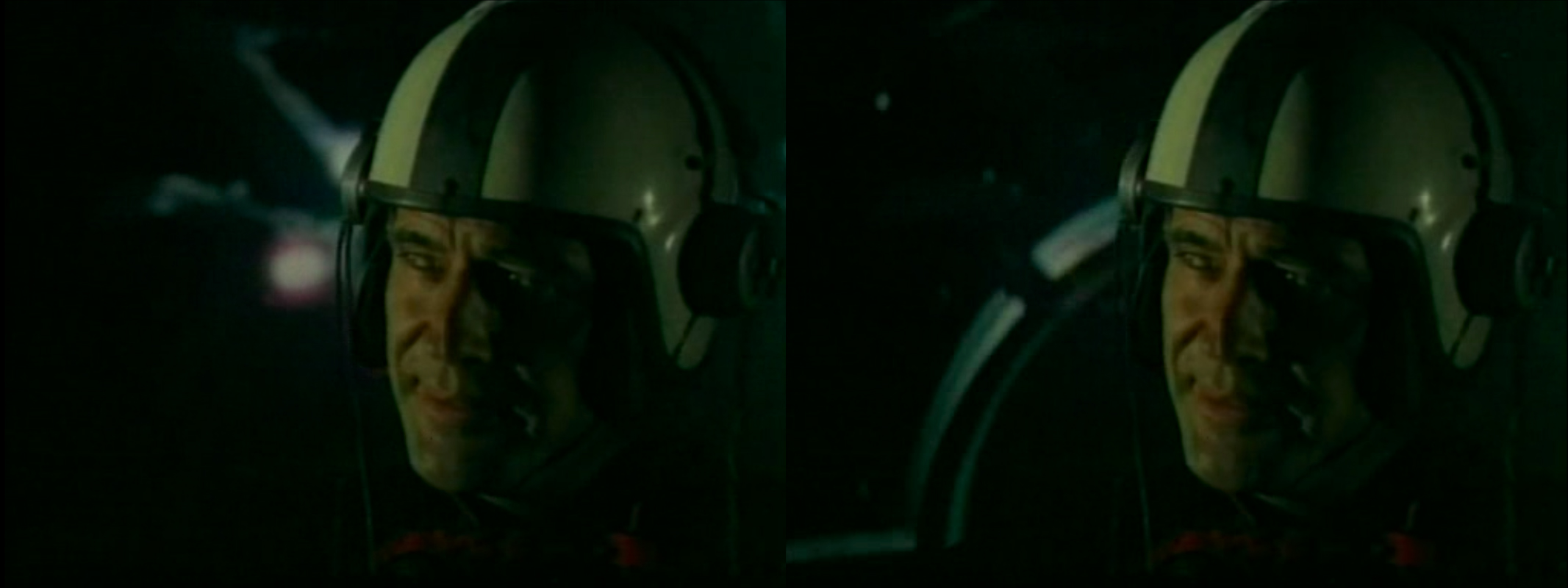

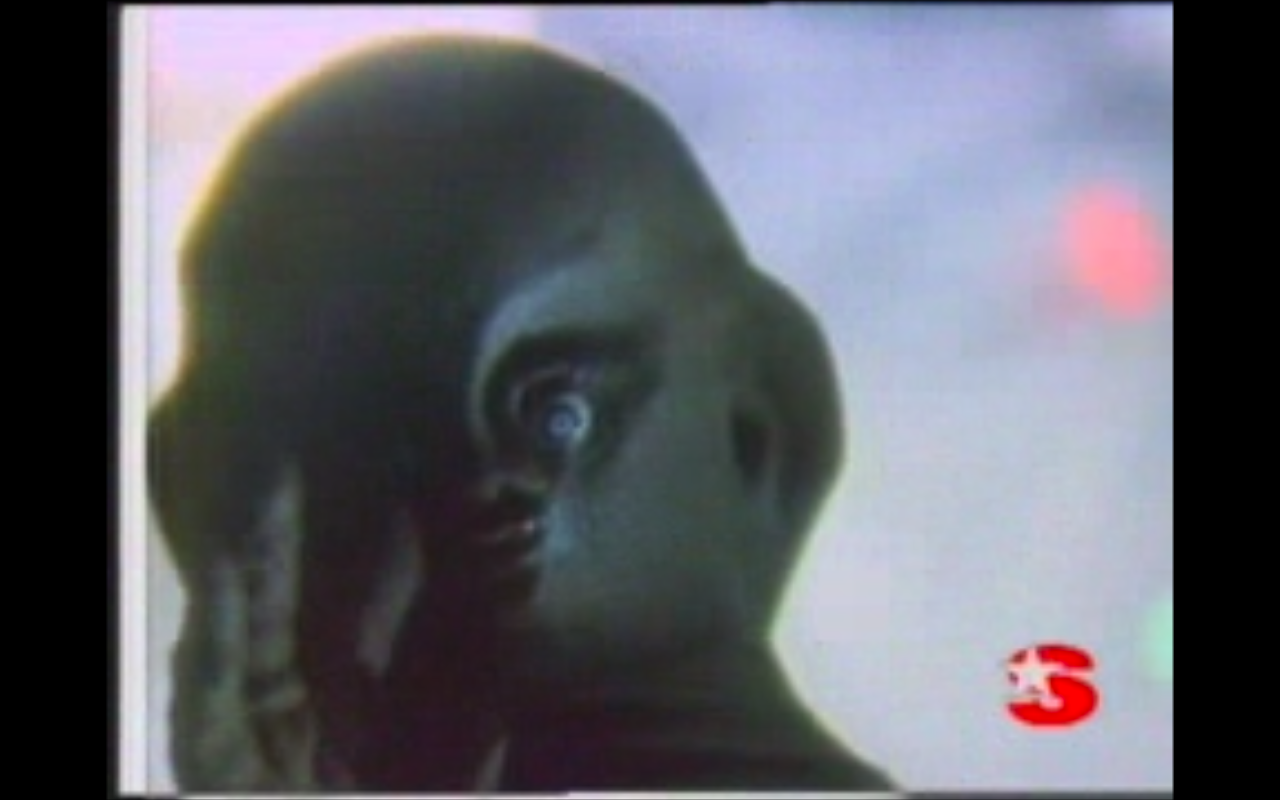
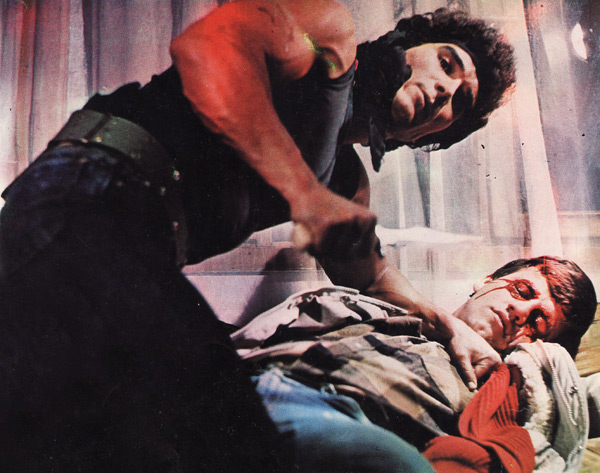



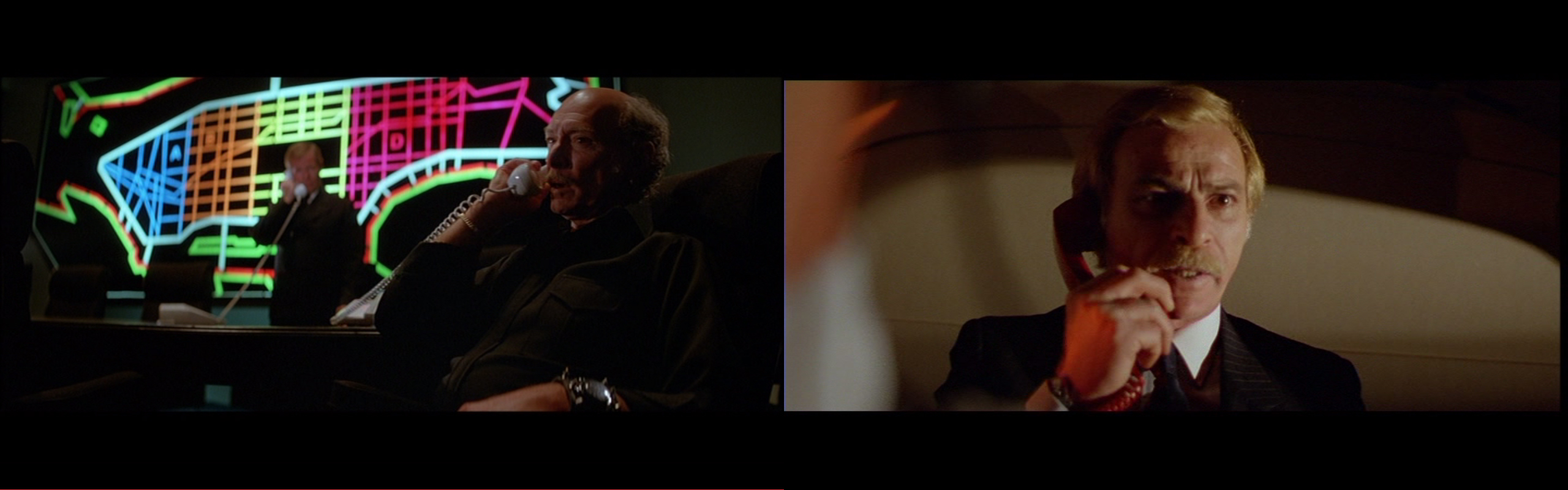
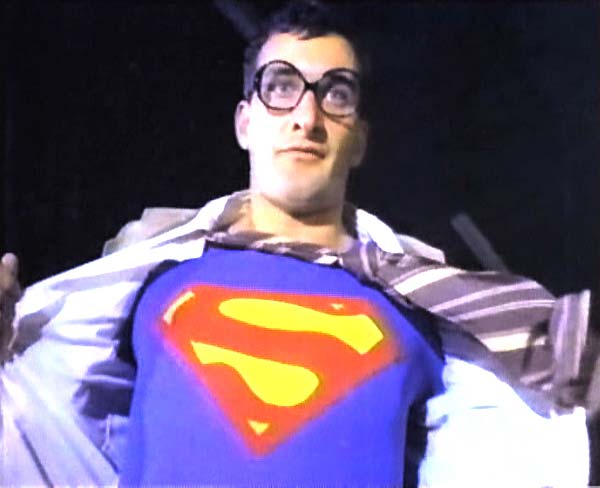

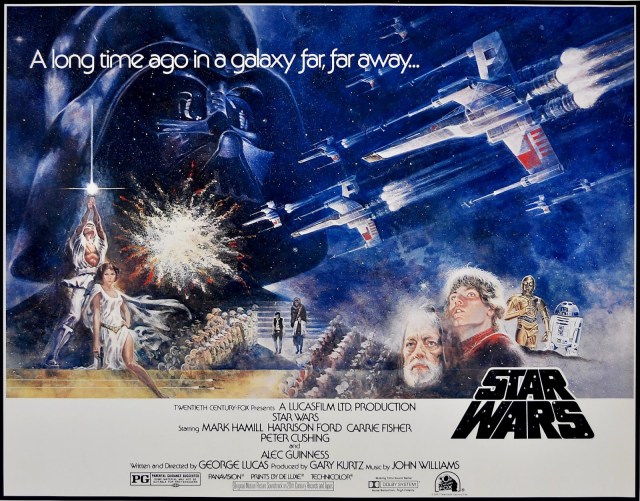
 Physical Impossibility