A Bonus Interview with Larry Cohen

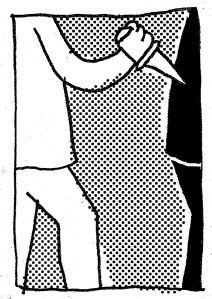
Black Caesar

Black Caesar illustration by Stephen Kelly

My new zine, Physical Impossibility #1: The Films of Larry Cohen, incorporates an exclusive interview with the legendary writer-director of Black Caesar, God Told Me To, It’s Alive, Q, The Stuff and Wicked Stepmother. The following is excerpted from the same interview, during which we also discussed Cohen’s association with Alfred Hitchcock, how he feels about his legacy, the unproduced scripts he’s posted on his website and what he’s up to these days.

SW: It’s been suggested that your Phone Booth script was originally mooted as an Alfred Hitchcock picture. Is that true?

LC: Well, it wasn’t a script when I talked to Hitchcock about it. It was just an idea. And I mentioned it and he had the same idea, more or less, and how could we go about doing it? I was never able to figure it out when he was alive. But I figured it out years later and oddly enough it was just by taking a character from another one of my movies, which was the sniper in God Told Me To, and putting the sniper into the Phone Booth movie and suddenly it all made sense. It was staring me right in the face all that time and it never occurred to me to combine the two characters – the guy in the phone booth and the sniper. So once I had the sniper in the story, it just about wrote itself. I think I wrote it in a week. But by that time Mr Hitchcock was gone.

If Hitchcock had been around and taken these scripts, I don’t think that it would have worked out as well for me because he was not very generous with writers and, in terms of sharing credit with anybody, he didn’t treat his writers too well. So it might have been an unhappy result but it would’ve been a good thrill for me to have worked with Hitchcock and to have him do a picture of mine and probably would have done me immeasurable good in terms of other jobs, people hiring somebody who had done a Hitchcock movie. But Hitch was not adverse to just firing a writer and putting other writers on the script so it might not have gotten a clear account of your own material because many of these directors try to camouflage any writing credit by having a bunch of writers on the picture, figuring if there’s a bunch of writers, then there’s no writer at all and they can have all the credit. And too often people are interested in gathering up the credit for things they didn’t do. Which is another reason why I do everything on my pictures, so there can be no question about who made the picture.

Do you think of yourself as an auteur?

Well, if anybody is an author, it’s me, because I do everything. Many people get credit for being authors when they didn’t write the script. You know, they try to obliterate the writer and say, “Well, I made the picture, I’m the author of the picture,” but very few of these people are truly authors of their pictures. I mean, they’ll certainly have created a style of picture that they make, so whether it’s Hitchcock or any of the other guys… But there were writers involved in everything. I mean, most of Hitchcock’s material is based on a book, whether it’s Strangers On A Train, which is based on a book and Vertigo, which is based on a book. I mean, everything is based on something else – they didn’t come up with the initial idea. They made the picture, so they consider themselves the auteur of the picture, but there was somebody else in there before them who really came up with the basic story and they just embellished upon it.

You’ve not directed a film since 2006’s Masters of Horror episode ‘Pick Me Up’. Was it a conscious decision to move away from that and focus on writing?

I only want to direct pictures if I have absolute, 100% control. I’m not looking to take jobs directing for other people. So I don’t want to get into a situation where somebody’s telling you what to do, or what I can’t do. It’s sad when certain directors, late in their career, find suddenly that they’ve lost their power of authority. Like Frank Capra, for example. He quit the business because after the last couple of pictures he did, he wasn’t in charge of the entire production and he had to keep making compromises and he was unhappy with the situation. So he decided he was not going to make any more movies. And he withdrew to Palm Springs and never worked again. And 25 years of idleness, you know? I mean, the best directors in the business – Billy Wilder spent the last 20 years of his life sitting around doing nothing because he couldn’t make any pictures any more because he’d lost his power of authority and he just couldn’t bear to make pictures that he couldn’t control. He was so used to being the boss of the production and he didn’t want to be an employee. Many other directors have the same problem and if you can’t run the show, you just don’t want to do it.

And I must say that I don’t have the same spirit of adventure that I had when I was climbing the Chrysler Building [for Q The Winged Serpent]… I took some foolhardy chances – shooting a chase through the St Patrick’s Day Parade [for God Told Me To] was probably an act of madness – but I did it. But I don’t think I would do it today, I just think it’s too reckless. I mean, I’ve got too much to lose. Back in those days, I didn’t have so much to lose, but now I’ve got affluence and I’ve got a lot of homes and real estate and I just don’t want to put myself in jeopardy. I never thought of that when I was doing this stuff before, but now the whole world is so litigious – you don’t want to get in the middle of lawsuits and stuff like that. So I’m much more careful than I would have been, in terms of going out and stealing scenes on the streets. And also you can’t go doing that kind of crazy stuff today, with all the terrorism and the security that’s going on.

How do you feel watching your own movies these days?

A lot of people don’t ever look at their own movies ever again. I don’t understand that. I always enjoy seeing the movies because they bring back movies of some good times and some nice relationships with people and sometimes nostalgia, since so many of the people who are in the movies are now dead and, you know, you see them again and they’re back alive and you remember the nice times you had working with them and how grateful you were for their performances.

The Stuff

The Stuff illustration by Ryan Bharaj

All I know is the pictures are still being seen and enjoyed after 35-40 years, so that’s something of a compliment. A lot of pictures have been forgotten and a lot of important, so-called important films or big-budget films have been forgotten but these little pictures seem to have sustained an audience all these years. And people call up and, like yourself, they want to do interviews and they want to ask questions and you have film festivals around the world where people show up, sometimes huge numbers. When we were in Vienna, we were filling up an 800-seat theatre every day. We ran 15 movies and everybody turned out for these movies. I just came back from Switzerland and another film festival. There was one in Australia that I wasn’t able to attend. They keep requesting the films and thanks to the DVDs, these films have become somewhat immortal. God bless DVDs.*

You’ve posted a selection of your unproduced scripts on your website [find them here], what was the thinking behind that?

Well, I have all these wonderful screenplays that haven’t been made and some of them have been optioned and a number have come back to me and haven’t been shot and I felt terrible about all this wonderful material being in the closet, just stored away so I thought, “Well, you know, if you’re a painter and even if nobody buys your painting, you would like to exhibit it in a gallery for people to see it, and so why not exhibit your screenplays?” And my screenplays are very readable and I thought, “Well, people might enjoy them, they’d get a kick out of reading them and they could imagine the movie and put their favourite stars in there and you know, play their favourite movie music while they’re reading it, or else have friends come over and read them out loud. Why not give people the chance to see the picture instead of keeping it just buried, waiting for somebody to buy it?” And I’m sure many of these scripts will get bought eventually. The industry has gone through a very slow period, economically, in the past few years. They buy many fewer scripts and they produce many fewer scripts. So I put these out, there’s 10 of them, I believe. I think I’m going to put 10 more out. Because I write a lot of scripts. I sell a lot of scripts, but I also write a lot of scripts that don’t get picked up right away.

And you’re still writing today.

Yeah, and things are happening, things are occurring. We’re doing a play over in England of Phone Booth. They did a stage play of Phone Booth in Japan, it was very successful. It toured in Japan and there’s a British adaptation being made for the British theatre. And I’ve got a lot of scripts that I’m writing. I just turned out two or three scripts this year and I wait to see what happens, we’ll try and get ’em produced. If not, we’ll put them on the internet for people to read.

With such an interesting career and so many stories, have you ever considered writing an autobiography?

I wrote a biography, it’s about 700 pages. I haven’t put it out to publication yet, because I think that there’s more to write, there’s more to tell. So, I haven’t finished yet.

Interview by Sean Welsh

Read much more in Physical Impossibility #1: The Films of Larry Cohen, featuring illustrations by Ryan Bharaj, Russell Elder, Victoria Firth, Sarah Amy Fishlock, Stephen Kelly and Claudia Nova. Order your copy here!

*Many of Cohen’s films, though not all, are available on DVD or Blu-ray. Particularly, US distributors Blue Underground have released extras-packed DVDs of Bone, God Told Me To, Q The Winged Serpent as well as the Cohen-scribed Uncle Sam. In Australia, Monster Pictures have given The Stuff similar treatment. In the UK, Arrow have released a typically well-appointed Blu-ray of Maniac Cop and are releasing The Stuff next year. Alternatively, a small selection of his films are available on iTunes and LoveFilm, and The Stuff is on Netflix.
Posted in Glasgow, Interview, Larry Cohen, Movies, Zine | Tagged , , , , , , , , , , , , , , , , | 2 Comments

ZINE: The Films of Larry Cohen

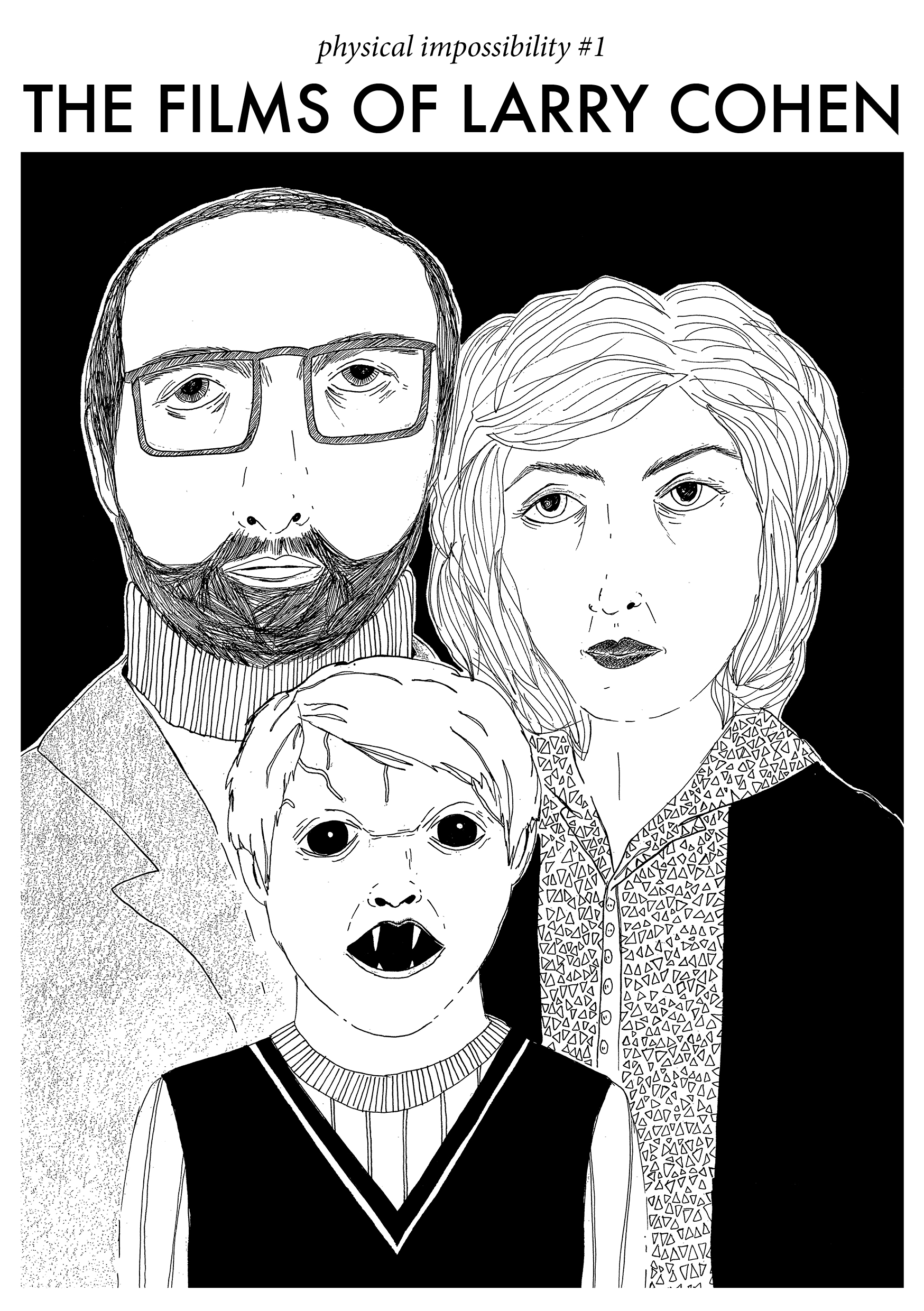
zine-coverI’m excited to announce the launch of my first zine, Physical Impossibility #1: The Films of Larry Cohen, featuring all-new writing by myself and original illustrations by Ryan Bharaj, Russell Elder, Victoria Firth, Sarah Amy Fishlock, Stephen Kelly, Erin McGrath and Claudia Nova

The Films of Larry Cohen covers the whole of the legendary director’s career in film, focussing on six movies: Black Caesar, God Told Me To, Q The Winged Serpent, The Stuff, Maniac Cop and Wicked Stepmother. The zine also incorporates an exclusive interview with Larry Cohen himself, conducted in September 2013.

There’s a launch event at The Old Hairdressers in Glasgow on Thursday 14/11/13, with a screening of Q The Winged Serpent. Copies of the zine will be available then and there but it’s also available for pre-order here now – the first copies will be sent out on 14/11.

Here’s a preview of the introduction, alongside the cover (above left).

~

The Films of Larry Cohen

“What I started out to do is to make movies that all have a similar theme. Like, you know, a painter who you always know the painter painted it because you see the style of painting. You go, ‘Oh, that’s a Van Gogh,’ or ‘That’s a Renoir.’ You know that style. So I try to make movies where you would know it was Larry Cohen’s movie, even if you came in after the credits, after a few minutes you’d say, ‘This has gotta be a Larry Cohen movie.'” Larry Cohen

Long Island, 1985. A peculiar man in a peculiar wig speeds a car through suburban streets. A peculiar-looking young boy the peculiar man’s just rescued (from a peculiar situation) says sheepishly, “’Scuse me, sir,.. I kinda just threw up in your car.” But the man’s already noticed, he’s nonplussed. “I’m sorry…I just ate shaving cream!” offers the panicked boy. “That’s alright,” says the man affably, glancing at the boy in the rearview mirror, “Everybody has to eat shaving cream once in a while.”

I discovered the films of Larry Cohen by chance, even accident, when a DVD of The Stuff arrived in my mailbox, unexpectedly, from LoveFilm. I can’t really account for how or why I came to add it to my rental list, except for, on paper, it’s exactly the kind of film that I would add to my rental list. With the tagline, “Are you eating it or is it eating you?” and the kind of lurid, melting-eyes-screaming-face cover reminiscent of dozens of movies I couldn’t reach on the high, moulded plastic shelves of the hardware-store-cum-video-shops of my childhood, The Stuff and I had a date with destiny.

To say Larry Cohen’s extensive oeuvre had been hiding in plain sight would be misleading, because although The Stuff is pretty easy to stumble across, many of his films are still unavailable in the UK. This was and is frustrating because, just as The Stuff’s dead-on parody jingle has it, “enough is never enough” of Larry Cohen’s movies – one taste and you’re hooked. They’re endlessly quotable, absurd in tone and narrative thrust, hilarious and satirical without the deadening self-awareness of pre-packaged modern “cult” movies. The best films stay with you after the credits roll, fill your head like throbbing, sentient ice cream, keep you thinking. In this case, it was one thought, over and over: “Who made this fucking thing?!”

And more, in quick succession: “Are there more films like this?”, “Are they as wild, as original, as straight-up enjoyable?” and “Where can I get some ice cream? I really want some ice cream.” So I had some ice cream, and set to hunting down all the Cohen films I could easily find on DVD – Q, the It’s Alive trilogy, Black Caesar – while evangelising about The Stuff to anyone and everyone I could. Looking to answer those first questions, I discovered for myself a treasure trove of movies spanning 40 years.

The title on Cohen’s IMDb page most recognisable to mainstream audiences is likely Phone Booth (Joel Schumacher, 2002). Cohen wrote the screenplay, sparking a bidding war, which he parlayed into a late career flush as the writer of Cellular (David R Ellis, 2004) and Messages Deleted (Rob Cowan, 2009). He also wrote Captivity (Roland Joffé, 2007), a serviceable thriller awkwardly reworked mid-production to cash-in on the noughties torture porn craze. Of the latter two Cohen now admits, “They rewrote the scripts, they screwed them up, they ruined the pictures and I’m not proud of them.” But if anything, those movies are a kind of proof of the strange alchemy Cohen is capable of when he retains full mastery of all the necessary elements.

In the 1970s and 80s, when Cohen was at the absolute height of his powers, he wrote and directed films nowhere near as shiny and expensive and exponentially more imaginative. Exploring the oeuvre of Larry Cohen, you’ll be introduced to the Black Godfather of Harlem, blood-thirsty mutant babies, a hermaphrodite faux deity, a sentient, malevolent dessert, a resurrected serpent god relieving innocent New Yorkers of their heads and a chain-smoking Hollywood witch. Cohen is first and foremost a dedicated and prolific writer, but he’s also a highly inventive writer-director-producer with a knack for extracting memorable performances from his actors. He’s an iconoclast and a grade-A B-movie ‘smuggler’ in Scorsese’s definition, whose films, with all the bottom-line appeal of the genre movie, conceal deeper, more thoughtful concerns. But, writing this, I don’t necessarily want to persuade you with a piercing intellectual reappraisal of Cohen’s movies, which are already compelling enough on the surface. I just want you to watch them, if you haven’t already, and I hope you do.

~

The zine is an edition of 50 – A5, black & white, 20 pages. It will be released on 14/11, but you can pre-order a copy here – it costs £4 + 90p postage within the UK (1st class Royal Mail). If you are an international customer, please contact sean.m.welsh@gmail.com prior to ordering, and I’ll get back to you with a postage quote.

btn_buynow_SM

Posted in Glasgow, Larry Cohen, Movies, Zine | Tagged , , , , , , , , , | 1 Comment

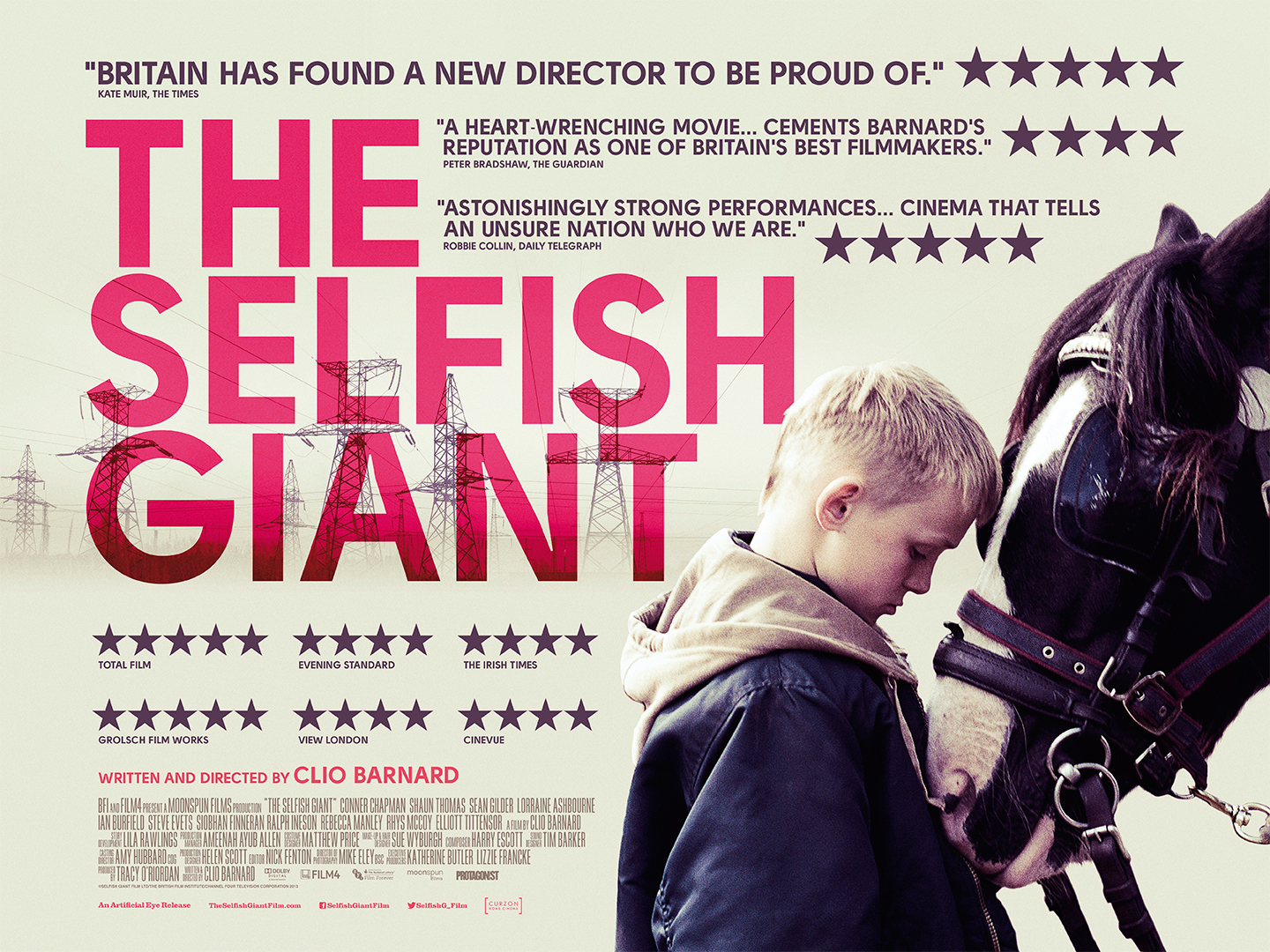
The Selfish Giant Programme Note for GFT

Selfish Giant

The Selfish Giant (Dir. Clio Barnard, 2013) is screening at GFT from Monday 21st October to Thursday 31st October. My accompanying programme note will be available at screenings – read it online here! GFT archives all its programme notes online here.

The film will also be available to watch on the GFT Player from Friday 25th October, which, go and see it in the cinema first for fuck’s sake.

Posted in GFT, Programme Note | Tagged , , , | Leave a comment

View History #3

In this installment: Hugh Jackman’s claws are clipped in more ways than one, a new refutation of objective quality and then a confusing refutation of that refutation.


The Wolverine (James Mangold, 2013), Cineworld

Maybe the worst you can say about The Wolverine is it’s a not-bad action movie, hamstrung by competing impulses. Instead of the 18-rated “Kurosawa’s Wolverine” teased by original director Darren Aronofsky, it’s stuck in the 12A world established by Brian Singer 13 years ago in X-Men (2000). A lot’s happened in those 13 years, including Nolan’s Batman trilogy (which demonstrated how to ‘dark’ within the limits of a 12-rating) and the full flowering of the Marvel Studios cinematic universe (which has managed the magic trick of pleasing fanboys and general audiences at the same time). Meanwhile, arguably the strongest and most interesting sub-section of the Marvel comic books universe has been unfolding on screen in a less than thrilling fashion, lately to diminishing returns. Jackman’s Wolverine is stuck in a mode where his deadly claws slash and tear mostly bloodlessly, bizarrely so, instead of rending limbs left right and centre. He’s allowed to swear conspicuously once a movie, just enough to provoke a teenage chuckle but not trouble the censor. His hair continues to be artfully coiffed, implying an uncharacteristic amount of effort teasing his hair just so, whenever he isn’t quasi-feral or in the rain.

The problem isn’t really Jackman, who earns his pay through genuine passion for the source material and a truly inspiring devotion to the physicality of the role (and, as a side bar, it’s great that he’s been able to stay with the role through six, soon to be seven, movies). Even in the movie that was supposed to dismiss the less than fond memories of X-Men Origins: Wolverine (Gavin Hood, 2009) and finally give Wolverine a chance to shine, he remains riveted to Singer’s tone and mythology. So he gets let of the leash, but only so far. Mangold’s movie seems to want to deliver on Aronofsky’s tease, but is allowed to only partially, which completely undermines it. In 2000, it was impressive enough to see the X-Men realised on screen at all, but in 2013 it’s no longer asking too much that comic book movies are simply unembarassing. The Wolverine, like the rest of the X-franchise, is really just OK and the audience deserves better.

Laserblast (Michael Rae, 1978), DVD

A couple of weeks ago I wrote about the physical impossibility of watching all the films I’d like to see in one human lifetime. Then last week, after I wrote about Empire of the Sun, a pal praised my honesty in admitting I hadn’t seen it before, suggesting another writer might try to hide that fact. That reminded me of when I was blogging for Glasgow Film Festival and I recommended a screening of Heaven’s Gate, suggesting it was the right time to give it a chance, while noting that I myself still only knew it by reputation. One reader took issue with this and demanded of GFF, “Why hasn’t your blogger seen Heaven’s Gate?” Finally, I read Keith Phipps of The Dissolve pointing out that “one of the not-that-dirty secrets of this business is that those of us who write about movies don’t have time to see everything we aren’t reviewing, much less in a timely fashion.”

Audiences and reviewers alike are completely overwhelmed with choice these days – from multi-screen cinemas, art house cinemas, pop-up cinemas in odd venues, art galleries, pubs and clubs to TV movie channels and VOD to cheapo vanilla DVDs available on the high street, online stores and eBay and beautifully remastered Blu-rays packed with expertly-curated extras. Nevertheless, there seems to be a certain omniscience expected of film writers, at least if they want to be considered credible, and knowledge of “the canon” is a given. Well, I’ll be honest with you – I’ve not exhausted Bergman’s back catalogue and Stroheim is not my stronghold, but I have seen Starcrash and practically everything Larry Cohen’s had his fingers on. I’m writing about film because I love movies of all descriptions – discovering them for the first time and following my nose into strange territory – and I think it’s beyond fucking pointless to sustain the pretense of having seen all the ones I’m supposed to have seen in order to write about them credibly. So while I’ve seen a million movies, I’ve not made a particular point of exhausting the classics.

Nevertheless, I wouldn’t say I’m particularly predisposed to what a lot of people would call “the worst movies ever made.” Laserblast does make a better case than most for inclusion on that list – there’s almost nothing right about it. However, I’m really sceptical of the concept of “so-bad-they’re-good” movies, because more often than not it’s just an excuse for people to feel superior, and usually involves assuming the absolute worst of filmmakers. Snide, snobby and cynical – generally the opposite of what I’d aspire to as a film writer. So I contend it’s possible to enjoy the ingenuity, absurdity and sheer enjoyability of those movies, without sitting above them, snarking over the stupidity of everyone involved, safe in the knowledge that there’s no need to appreciate the movie – Upstream Color‘s for appreciating – on its own terms. It’s true, ironic appreciation thrives on a certain psychological distance to work, and these films generally invite it by severely testing the suspension of disbelief necessary in cinema. But too often quality is mistaken for worth and ‘good taste’ is the banner – and the bludgeon – of joyless aesthetes and cultural fascists.

But neither am I an apologist for terrible movies and while it’s a truism that nobody sets out to make a bad film, starting from the title backwards is not often the best approach. So, Laserblast: one of the worst films ever made, built backwards on a shoestring budget by B-movie producer Charles Band and now resurrected on DVD as part of 88 Films‘ Grindhouse Collection. The story is this: a bullied, loser kid finds strange weaponry, misplaced by aliens, then uses it first to take revenge on those that wrong him, then on anyone who gets in his way. Complicating matters are the aliens on his track, and the fact that using the weaponry is gradually transforming the kid into a monstrous killing machine. So, to sum up, Laserblast is awesome…in theory. In another dimension, Michael Bay and Shia LeBeouf could have remade this instead of Transformers and delivered a diverting summer blockbuster.  Michael Rae’s Laserblast, though, fucks things up the basic concept in a much more interesting way.

Eddie Deezen, terrifying bully

Eddie Deezen, terrifying bully

Miscast to such an extent that archetypal 80s nerd Eddie Deezen plays one of the jock bullies, the movie also tries to pass off the preening, 27-year-old Kim Milford as the bullied loser – immediately lending an awkward air of confused eroticism to an early stand-off with his feckless mother. The cut-price score has its characters grooving to library rock ‘n’ roll and the aliens are rudimentary stop-motion who seem to share a common tongue with the Clangers. The filmmakers also have the brass balls to reference Star Wars the year after it came out (Deezen’s character has apparently seen it five times) and conjure a convincing sense of danger with several molten, mushroom-clouding explosions (one of which makes toast of a Star Wars billboard), shot from several angles and thus milked for all their worth. It also features several prolonged shots of an exultant transmogrified Milford, reveling shamelessly in the destruction he has wrought.

I blame the parents.

I blame the parents.

I can’t think of any other film like it, which, to me, justifies its longevity. 88 Films’ motto is “Classic movies treated with respect,” and I for one am grateful for how elastic the definition of ‘classic’ is in 2013.

Time Bandits (Terry Gilliam, 1981), Blu-ray

On the other hand, Arrow Films are continuing to do an impressive job of curating and canonising B-movies, maligned masterpieces and genre curios. They’ve become kind of like the movie distribution equivalent of an indie record label whose fans will buy anything they release just because they’re releasing it and I have to say it’s actually gosh darn delightful to rediscover Time Bandits with their immaculate Blu-ray release. Although Terry Gilliam co-wrote with fellow ex-Python Michael Palin (the latter fleshing out Gilliam’s rampant storytelling with expert characterisation) and starring roles for Palin and John Cleese gave it a marketing headstart, Time Bandits is nevertheless the point that established the adjective “Gilliamesque”  as opposed to “Pythonesque”. Bursting with high adventure, thrilling action, absurd comedy and unforced pathos, Time Bandits is dreamlike and nightmarish in equal measure. It’s a perfect marriage of wild imagination and expert craft, a rare alchemy at any point, let alone now.

The new restoration is stunning, highlighting the ingenious practical effects (only a stray bit of masking tape on one set has been digitally tweaked out of existence), production design and cinematography. The tactility that Gilliam conjures up through the various historical periods is still hugely impressive. But more than anything it’s all hugely enjoyable, and the climactic showdown with David Warner’s Evil amongst the enormous grey Lego bricks of the Fortress of Ultimate Darkness is more fun to watch than most movies manage to deliver in 90 minutes. And that ending! I’m not going to spoil it for anyone that’s not seen it (although it’s not a twist, per se), but it’s perfectly symbolic of how singular this movie is. Gilliam reveals in Arrow’s supplementary interview how he managed to circumvent studio test audience feedback to keep it in. Asked what they liked best about the movie, several unimpressed jokers had scrawled “the end,” allowing Gilliam to fox overly literal, stats-focussed marketing men. Time Bandits ended up being number one film in America for five weeks.

Gilliam also tells of being praised to this day for casting dwarf actors in lead roles – he wanted to tell his story from a kid’s point of view, but reasoned a kid couldn’t hold a whole movie and would therefore need a gang of similar height – but the Bandits themselves are frustratingly absent from the otherwise pretty thorough supplementary material (there’s also reportedly some shot but unused scenes that may well be lost). By my account, David Rappaport, Jack Purvis and Tiny Ross are sadly no longer with us, but Kenny Baker, Malcolm Dixon and Mike Edmonds are still alive, as is Craig Warnock. Though the interviews with Gilliam, Palin, David Warner and key member of the creative team are fascinating, it would’ve been great to hear the Bandits’ stories too. I did contact Arrow to try and puzzle out their non-appearance but I didn’t hear anything back. No reason why they’d need to respond to little old me (their time is definitely better spent putting together upcoming releases like Brian de Palma’s Phantom of the Paradise) and anyway it’s a minor niggle with an otherwise deeply satisfying package. If you’ve never seen Time Bandits, I’d recommend addressing that immediately. Laserblast, at your leisure.

Posted in Movies, Reviews, View History, Working Hard/Hardly Working | Tagged , , , , | 1 Comment

View History #2

This week, Matt Damon runs about wearing Meccano over his jammies, Patrick Bateman’s secret origin is revealed and Batman…because sometimes it’s just more effort not to talk about Batman. Sadly, pathetically, it was the weekend before I got anywhere near a movie this week…

FRIDAY 23/08/2013

Elysium (Neil Blompkamp, 2013), Cineworld, 11:00
This was really kind of a crushing disappointment when you take into account Neill Blomkamp’s excellent debut District 9 (2009), and Elysium‘s promising trailer. Like Prometheus (Ridley Scott, 2012) and Oblivion (Joseph Kosinski, 2013) before it, the set-up is great, but it quickly takes a turn towards lazily-scripted nonsense. Jodie Foster is inexplicably dubbed throughout and although it’s her own voice, it’s strange and completely distracting. Digging around, it seems the double-Oscar-winning actress originally chose to perform with a French accent (she’s fluent and, ironically, dubs her own films for French release), but someone, somewhere decided to veto that choice…after the fact. Elsewhere, there’s a bunch of dialogue conspicuously delivered over cutaways, which generally suggests late-in-the day, post-production story fixes. That probably wouldn’t be as noticeable without the Fauxdie Foster scenes as a cue, but the script itself eventually stretches incredulity, undermining everything else and the whole thing unravels into just-because plotting and hackneyed “hero’s journey” tropes.

It’s a cliché in itself, but it’s still bizarre and a shame that all these amazing-looking, mega-budgeted studio sci-fi films can’t even get their scripts straight before they start shooting. Pacific Rim was phenomenal but it only gets a pass on some pretty horrendous dialogue and plotting because it was so beautifully crafted (though some of the truly horrific accents could have used some dubbing). So what went wrong with Elysium? Studio interference? I don’t know if there’s any suggestion of that – the lead role was originally earmarked for Die Antwoord’s Ninja (he turned it down) and Damon was actually Blomkamp’s third choice after, um, Eminem (he would’ve done it if they filmed in Detroit). Apparently the film was sold on the strength of Blomkamp’s designs rather than the script, so it would seem he had a pretty free hand otherwise. A lot of people like Prometheus and a lot of people like Elysium, but both of those films could have been so much better, in frustratingly obvious and easy to fix ways. I doubt Blomkamp’s reputation – built on his VFX work as much as District 9 – will be dented by Elysium, but it’s hardly a stellar second act.

SATURDAY 24/08/2013

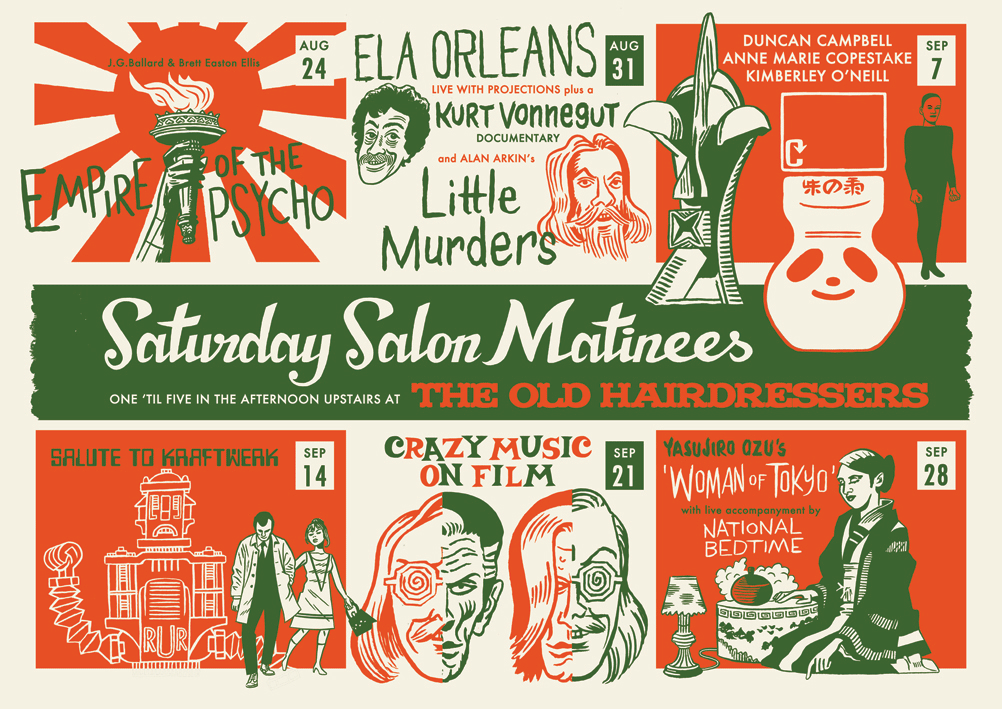
Saturday Salon Matinees poster by Marc Baines


Empire of the Psycho, Old Hairdressers, 13:00
This was the first in six weeks of Saturday Salon Matinee events programmed by The Old Hairdressers and The Fantom Salon (personified on the day by Rob Churm and Marc Baines). I’ve seen a few film events in the Hairdressers, including Strange Vice’s expertly-curated b-movie marathons, and we even did one ourselves with Matchbox Cineclub (the Jay Reatard doc, Better Than Something). It’s a good space, kind of tucked away upstairs, and if you can cope without Cineworld bucket seats you’ve a great chance of seeing something cool. Baines negotiated the Hairdressers’ squeaky floor upstairs to introduce the most “film-heavy” of the planned matinees, a double-bill of Empire of the Sun (Steven Spielberg, 1987) and American Psycho (Mary Harron, 2000) which, Churm elaborated, we should think of as one megafilm, “where Christian Bale is the same character and we learn why he’s a psycho in the first film.” A short film by Anna Kraay based on Empire of the Sun writer JJ Ballard’s The Concentration City (and “slightly inspired by La Jetee”) preceded the double-bill.

I’d seen American Psycho a fair few times, but never Empire of the Sun, so I was in it for that at least. Watching it for the first time in this context was interesting. It’s a stretch, obviously, to fit the two films together narratively or even chronologically, but the programming was clearly more playful than pretentious. Primed to search for them, you find there are aspects of Bale’s performance in Empire of the Sun that rhyme nicely with American Psycho – particularly when his character, face caked in mud and surrounded by clippings from US magazines, adapts an American persona. I’d like to have seen Patrick Bateman reframed in the context established by Bale’s earlier performance, but it wasn’t to be. A late start and a thinning crowd (those wooden pews are kind of punishing) meant they elected to drop American Psycho in the end, but I reckon the concept was sketched successfully enough. Churm proposed the experiment could be extended even further by appending Nolan’s Batman trilogy, which personally I think is an excellent and sensible way to spend 12 hours.

From the awesome poster (see above, credit to Baines) onwards, this is a great idea and the next five weeks look even more interesting. Upcoming, they’ve got Little Murders (Alan Arkin, 1971) backed with a Kurt Vonnegut Arena interview and a live performance from Ela Orleans in collaboration with Natalie McGowan, then the Glasgow premiere of Duncan Campbell’s It For Others (2013) alongside pieces from Anne Marie Copestake and Kimberley O’Neill, then a rare screening of Trans-Europ-Express (Alain Robbe-Grillet, 1966) with a complementary Kraftwerk on ukulele performance from Gus. If you can, you should go – especially because it’s free. Here’s the trailer for Little Murders to whet your appetite:

Daredevil (Mark Steven Johnson, 2003), DVD
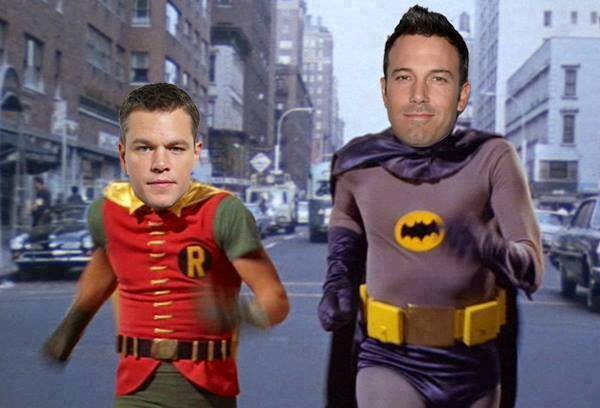
Alas, instead of taking Rob Churm’s advice, I spent the next couple of hours (it did feel like 12) with the new Batman, Ben Affleck, in his first outing as a costumed vigilante. This week, Affleck got cast in Zach Snyder’s as-yet-untitled Man of Steel sequel, to mixed reaction. Seems like, Oscars or no Oscars, a lot of people can’t get past Gigli (meanwhile no-one even remembers Al Pacino was in that movie, probably because he was pretending to be Jon Lovitz). Plenty’s been said about it already – petitions have been started, jpegs have been doctored – and the call for common sense to prevail has been sounded, most sensibly indeed, by Matt Singer over at The Dissolve. Past experience suggests everyone should have a coke and a smile and shut the fuck up till the movie’s actually made.

But where’s the fun in that? It’s been pointed out that plenty people hated Heath Ledger for the Joker when his casting was first announced and, even more to the point, folks hated Michael Keaton for Batman at first. Bleeding Cool provided a salient look at some press cuttings from 1988, when random Batfan Beau Smith asserted, “Batman should be 6-2, 235 pounds, your classically handsome guy with an imposing, scary image.” Affleck is 6′ 2.5″ (thank you, celebheights.com), estimated at 205 pounds (but he’s already bulking up for Bats). So Beau, wherever he is now, should be delighted. The interesting thing to me is since 1989 (and arguably since 1978, when we first believed a man could fly), the audience (read: fandom) has evolved to the point where a Batman exactly to the necessary visually specifications is still cause for concern. Or maybe it really is just the Gigli thing.

Imgur

Imgur

Either way, Snyder’s past form suggests two things: a preoccupation with the visual, preferably of the spectacular variety, on one hand and casual, brutal, inconsequential violence on the other. The former made Man of Steel seem a promising antidote to Bryan Singer’s good-at-lifting-things Supes, while the latter later proved to undermine, for me, the film he ultimately made. The same qualities made his Watchmen simultaneously the most slavish comic book adaptation ever made (visually) and one of the most tonally off-base (Nite Owl and Silk Spectre as lethal, quasi super-powered brawlers?!) I remain sceptical that the ‘world’s greatest detective’ aspect of Batman – the aspect that usually gives him the edge over Superman – will be properly served. However, the Superman we saw in Man of Steel oversaw mass devastation on a par with several 9/11s and ultimately executed his enemy. I’m sure it makes sense for Bats, if not Lex Luthor, to have something credible to say about that in the sequel, should Snyder want to address it. Regardless, Affleck will be the eighth person to portray Batman onscreen; Daniel Craig made eight for James Bond too (if you include two ‘unofficial’ outings). Unless they totally fuck it up (in the industry, it’s called “Schumachering”), the next-but-one Batman already walks among us and the spoiled geek youth of today really don’t know how good they’ve got it.

Oh, yeah, and I watched Daredevil on DVD – not the director’s cut, mind – and Affleck is really not what’s wrong with that movie. As long as Snyder’s Bruce Wayne doesn’t take a flirty tap class with Talia, we may be OK after all.

SUNDAY 25/08/2013

The X-Files: Fight The Future (Rob Bowman, 1998), DVD
I started Sunday at Braehead for Collectormania, hoping to catch a glimpse of Lance Henriksen in person, if not shell out £20 for his signature (in the end, I missed him entirely). I did meet the creator of The Crow, James O’Barr (who talked about liking Gemma Arterton for Shelly in the upcoming reboot – you’re welcome, scoop fans!) and Batman, so the day wasn’t a complete wash-out. Deeply regret not having deep enough pockets to raid the Strange Vice stall – I would have cleaned them out if I could – which was packed with awesome stuff. In particular, they stock Mondo Candido (Gualtiero Jacopetti, Franco Prosperi, 1975), which I am determined to pick up from their online store next time I can afford it. On the day, I could only stretch to a cheap, clearly bootlegged copy of Roger Corman’s Fantastic Four on DVD (not from Strange Vice, I hasten to add). Unfortunately, I’d spent my pocket money earlier in the week, because HMV and Fopp seem to have a bunch of stock they need to get rid of right now and they’re doing a 4 for £10 sale. Something to do with their going through administration earlier in the year, but some of the stuff on offer was ridiculous – one staff member, piling up stock, told me they’d even stickered-up a complete X-Files boxset earlier in the day. Weeping uncontrollably on the inside, I made do with a double-pack of the X-Files movies instead (together with Trash Humpers, a Quay Brothers collection and Samsara/Baraka on Blu-ray, so, swings and roundabouts).

In a couple of weeks it’s the 20th anniversary of the transmission of the first episode of The X-Files, so it seemed like a good time to revisist it.  The film is pretty much how I remembered it – like an extended episode of the TV show and not a whole lot to justify the big-screen treatment. Some nice moments  – Mulder spilling his guts to a barmaid, then taking an alleyway piss onto an Independence Day poster; “When I panic, I make this face” – but the ratio of too-long establishing shots (filler!) to concrete answers is frustrating. The best thing about it was it made me want to watch the whole thing from scratch, so I curse the person who picked it up the boxset for only £2.50, I really do. I hope they open it and find 55 discs of Gigli.

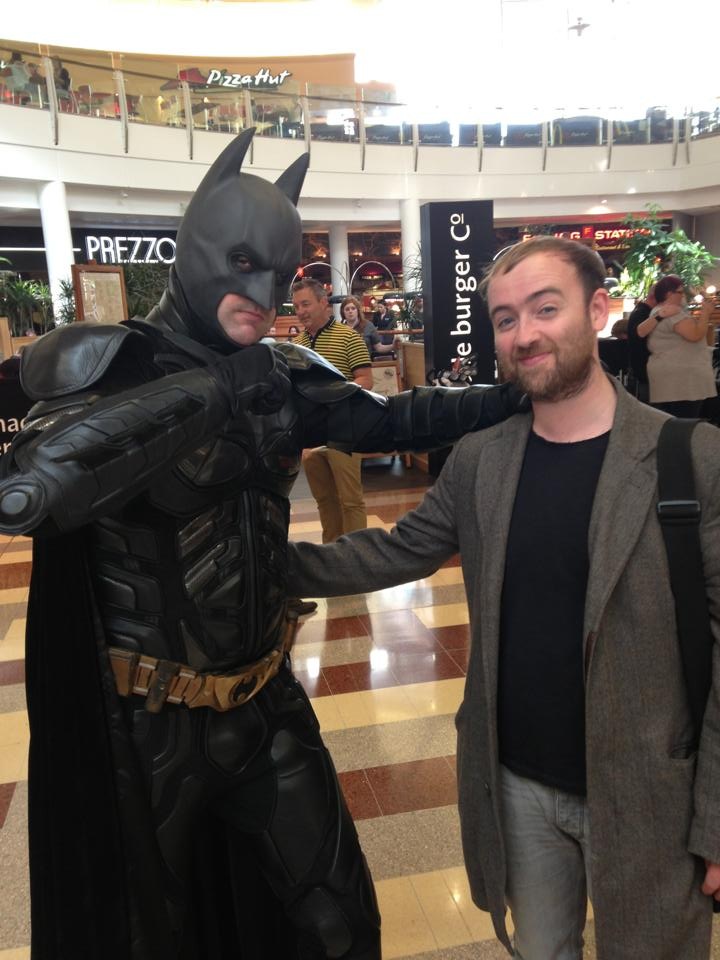
But, anyway, you can’t ruin the day you met Batman.

L-R: Batman, the author. NB for all I know, the man in the costume is a registered sex offender.

L-R: Batman, the author. NB for all I know, the man in the costume is a registered sex offender.

Posted in Glasgow, Movies, Reviews, View History, Working Hard/Hardly Working | Tagged , , , , , , , , , | 2 Comments