Going Clear (2015)

going-clear1

“The public has been hampered in the knowledge of Scientology by the fact that so far as I can establish, on every occasion that the organisation has been named by a newspaper, that newspaper has been served with a writ of libel.”
Peter Hordern MP, Parliamentary debate, 6th March, 19671

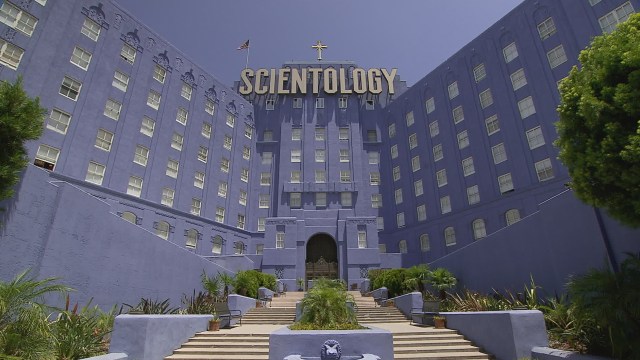
Alex Gibney’s adaptation of Jeffrey Wright’s book, Going Clear: Scientology, Hollywood & The Prison of Belief, on the rise of the most notorious of new religions, reaches us – by the skin of its teeth, seemingly – through a predictable fugue of potential lawsuits. Indeed, the Church of Scientology’s reliably dogged insistence on making the film’s journey to GFT or any other screens as difficult as possible is probably better publicity than a shipping container full of dinosaurs abandoned in Waterloo Station. If anyone is in any doubt about the relevance of Gibney’s documentary to British audiences, they need only refer to the vehemence of the Church’s opposition.

This is behaviour the general public has come to expect of the Church and while it certainly evokes the Streisand Effect more than a little bit, it is also worryingly effective. In fact, Wright’s book, widely credited with doing its level best to give L Ron Hubbard and Scientology a fair shake, still hasn’t been published in the UK. That’s because historically in the UK (well, England and Wales) the burden of proof in defamation cases has rested upon the defendant. That means UK publishers have been especially vulnerable when faced with the aggression, persistence and sheer means of the deep-pocketed religion.
going-clear

Likewise, while the 2013 Defamation Act amended UK law so that plaintiffs must demonstrate “serious harm” has been done to them, there are currently no confirmed plans to broadcast Gibney’s film, produced and broadcast by HBO in the US, in the UK. Reportedly that’s because Sky Atlantic, who control the UK rights, can’t differentiate its signal between regions, meaning a UK broadcast would necessarily include Northern Ireland, where the 2013 Act has not been made law (nor has it in Scotland, though reporting on the issue has mostly focused on Ireland, where the DUP have been vocal in their opposition to reform).

Scientology has almost always had a fractious, defensive relationship with the media. Almost, but not quite, as evidenced by some of the most remarkable footage in Going Clear, drawn from two episodes of Granada’s World In Action series – ‘Scientology For Sale’ (August 1967) and ‘The Shrinking World of L Ron Hubbard’ (August 1968) – as well as “off-the-record”2 outtakes from the second programme. The casual access allowed to the church’s founder, L Ron Hubbard, would not be repeated.

https://youtu.be/MWb7mQomUTc

The footage also reminds us that although modern fascination with Scientology, morbid or otherwise, is mostly focused on the distant antics of Tom Cruise, or folded into the “only in America” compartment of our collective unconscious, the Church actually has a long history in Britain, as demonstrated in the opening quote above, from a Parliamentary discussion on Scientology in 1967.

In Britain too, the following year, the magazine Queen (later Harper’s & Queen, now Harper’s Bazaar) published ‘The Scandal of Scientology’, one of the first exposés of the church. The author, American journalist Paulette Cooper, soon expanded her article into a book of the same name (just as Wright developed his controversial New Yorker profile of director Paul Haggis into Going Clear) and soon became the focus of successive covert campaigns (Operations Daniel, Dynamite and Freakout) aimed at discrediting her. She explains:

“I ended up falsely arrested and facing 15 years in jail, had 19 lawsuits filed against me all over the world by Scientology, was the almost victim of a near murder, was the subject of five disgusting anonymous smear letters sent to my family and neighbors about me, and endured constant and continual harassment for almost 15 years.”3

Scientology, as I’ve suggested, were never going to take Going Clear lying down. Earlier this year, they took out a full-page advert in the New York Times, criticizing both Gibney and HBO executive Sheila Nevins, comparing the documentary to the controversial, discredited Rolling Stone report on campus rape at the University of Virginia with an enormous headline reading, “Is Alex Gibney’s Upcoming HBO ‘Documentary’ a Rolling Stone/UVA Redux?”

going-clear2

While Gibney countered that a full-page ad is the “chosen device of a business protecting market share, not [a] church protecting belief,”4 it’s still ironic (or apposite, depending on your mood) that Scientology’s legal threat has reportedly “curtailed”, marketing plans for the film’s UK screenings, while the distributors and exhibitors involved asked not to be named in recent reporting.5 Nevins, meanwhile, is unrepentant. “[Documentaries] don’t get full-page ads,” she said recently, “and when they do, they do really well…Scientology did their own commercial for us.”6

Scientology have also set up propaganda (or counterpropaganda, depending on your mood) websites and invested heavily in promoting them. Google “Alex Gibney” and you’ll find the top hit for the Oscar-winning filmmaker is a sponsored link to a Scientology website dedicated to attacking him and his collaborators. Each merits a dedicated page and bespoke video dismantling their characters, undermining their testimony but not directly countering their accusations. Gibney asserts in return that, “a careful investigation of the church’s claims will reveal that most of the misdeeds by critics… were committed on behalf of the Church of Scientology… These people are now repenting and the Church of Scientology wants to punish them.”7

The version of Going Clear we’re getting has reportedly been edited from the original US broadcast, although there are suggestions this may extend simply to on-screen legal disclaimers. Despite that, there are suggestions the Church are even now trying to block Going Clear’s cinema release entirely, meaning I might be wasting my time writing this. On the other hand, perhaps I’ll avoid the fate of the US film reviewers who received the following email:

“The above article concerning Going Clear, Alex Gibney’s film, was posted without contacting the Church for comment. As a result, your article reflects the film which is filled with bald faced lies. I ask that you include a statement from the Church in your article. There is another side to the story which has to be told. Do not be the mouthpiece for Alex Gibney’s propaganda.”8

Sean Welsh, June 2015
This article was originally commissioned as a programme note by GFT.


Footnotes

1. Hansard, 6th March, 1967
2. Alex Gibney, ‘Alex Gibney on Going Clear’s Archival Scientology Footage, Using Drones, and Why More People Need to Speak Out Against the Church’ by John Horn
3. Paulette Cooper, ‘The Scandal of The Scandal of Scientology
4. Alex Gibney, Twitter, 16th January, 2015
5. ‘Scientology doc to get UK release despite pressure’ by Andreas Wiseman
6. Sheila Nevins, ‘Here’s the moment HBO knew its Scientology doc ‘Going Clear’ would be a huge hit’ by Jason Guerrasio
7. Alex Gibney, ‘Church of Scientology targets film critics over Going Clear documentary’ by Ben Beaumont-Thomas
8. Ibid.
Posted in Film, GFT, Glasgow, Movies, Programme Note | Tagged , , , , , , , , , , , , , , , , , , | Leave a comment

Jauja (2014)

jauja4

“The Ancient Ones said that Jauja was a mythological land of abundance and happiness. Many expeditions tried to find the place to verify this. With time, the legend grew disproportionately… The only thing that is known for certain is that all who tried to find this earthly paradise got lost on the way.”
Jauja, epigraph

“You’re trying to make sense of what’s happening, and gradually starting to lose the ability to make sense of it, but you still insist, looking for logic.”1
Viggo Mortensen

When an audience member at the New York Film Festival asked director Lisandro Alonso how to pronounce the title of his latest film, he replied, “It’s pronounced, ‘Fuck you.'” Alonso later expressed some regret, but in an extremely sorry-not-sorry fashion (“I mean, you can ask if you want, but ask the people sitting next to you.”2). Luckily Jauja’s promotional poster saves newer audiences their blushes, prominently displaying “How-Ha” beneath the title. Alonso’s onscreen epigraph, partly reproduced above, is however a little misleading; his characters are not actually on the hunt for Jauja, not precisely, anyway.

“País de Jauja” is a common Spanish expression referring to the mythical “land of plenty” (also per Jauja’s poster – thanks again, marketing team), which has equivalents in many countries, worldwide. The mythical city, analogous with the medieval Cockaigne, said to be a place of luxury, idleness and gluttony, was created as a fantastical escape from grueling medieval reality. It’s also a real place (once the capital of Spanish Peru, now the capital of Jauja Province), the wealth of which at the time of the Spanish conquest in the 1530s gave name to the Spanish iteration of the legend.

IMG_0130

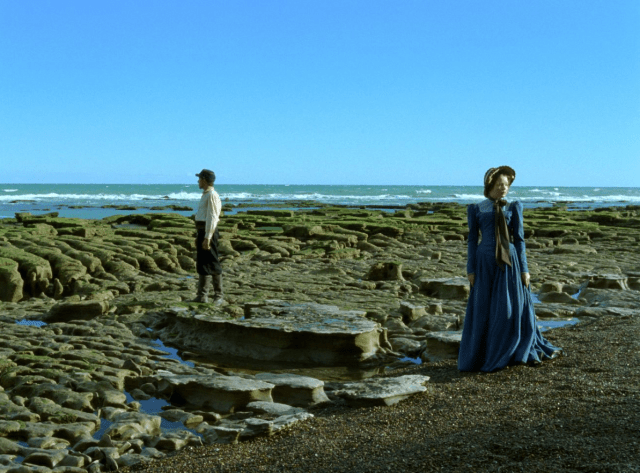
The majority of Jauja, however, takes place in late 19th century Patagonia, during the so-called Conquest of the Desert. Patagonia (by car, 66 hours “without traffic” from Peruvian Jauja, thank you, Google Maps), was itself named, by Magellan in 1520, for a mythical race of extraordinarily tall people the explorer claimed to have discovered on his travels along the South American coastline. The Conquest of the Desert, meanwhile, is a euphemistic description of what was, in Viggo Mortensen’s translation, “a genocidal war against the aboriginal population”.3 Mortensen’s seemingly anomalous character, a Danish engineer named Dinesen, is representative of the European assistance drafted by the Argentinian government to assist their ‘civilising’ campaign.

Alonso’s previous work includes the so-called Lonely Man trilogy, La Libertad (2001), Los Muertos (2004) and Liverpool (2008), though his other features, Fantasma (2006) and now Jauja, could also comfortably co-exist under that banner. Los Muertos in particular shares some of Jauja’s preoccupations, namely the dogged pursuit of a daughter and the journey into wilderness. To date, Alonso’s films have been recognisable for their lack of dialogue, stemming organically, it seems, from their focus on taciturn, solitary protagonists, usually played by non-professional actors. With Jauja, his first film in collaboration with a writer (Fabián Casas) and a major star (Mortensen), Alonso breaks from that practice. The director’s reasons for doing so are at the root of the film’s inception.

jauja

After Liverpool, unsure whether to continue making films, eager not to repeat himself, Alonso returned to his family’s farm, got married and started his own family. There contemplating resuming work, he received word in September 2009 that a close friend, the Slovenian film critic Nika Bohinc, had been killed in the Philippines. Struck by the loss, the director fixated on the idea of her parents having to fly over to return her body, and how they would cope with the sudden loss. Alonso shortly began working with Casas, producing a 20-page script, and soon Jauja’s storyline was outlined in Alonso’s 2011 short, Sin título (Carta para Serra). “Following her advice,” Alsono explains of Bohinc and Jauja, “I have devoted more space to words here, and to my own desires.”4

Casas’ involvement brought the project into his friend Mortensen’s orbit. By all accounts, the actor’s contribution was transformative. The protagonist became Danish instead of English, historically improbable but not implausible, though the actor himself was born in New York and raised in Argentina. Mortensen has explained, “I did research and found out some Danish people—and usually a guy like that, a military person—would’ve left Denmark under kind of complicated circumstances” (i.e. chosen exile over imprisonment).5 The actor drew upon his Danish father’s heavily-accented Spanish speaking voice for the role.

jauja2

Mortensen also contributed the opening scene, music (drawn from his ongoing collaboration with guitarist Buckethead), and his own costume, vintage 1874, complemented with authentic service medals from the First and Second Schleswig Wars. “I also promised myself,” he has explained, “I would speak the Danish of that era, by remembering how my grandparents spoke and by reading books from the period.”6 Polyglot Mortensen also brought fluency in Spanish to the table, thus we can be confident dialogue like, “¡Mi hija está invisible!” – “My daughter is invisible!”, rather than ‘missing’ – reflects his character’s imperfect grasp of Spanish, rather than his own.

Despite all this authenticity, the film has a deliberate quality of unreality, an artificiality enhanced by the temporal and geographical schism that transforms and elevates the film in its final minutes. Writing in Sight and Sound, Mar Diestro-Dópido asserted that “Jauja is most definitely not a period piece, more the illusion of one,”7 while the New York Times’ AO Scott described the film as “frankly anti-realist”.8 However, it’s almost as if Alonso’s previous devotion to realism can’t be entirely expunged, since the director has allowed for one reading, among the many plausible, that the entire main body of the film is an intense, Python-esque LARP exercise. After all, we never visit the referenced fort, nor the Minister of War’s ball, attending instead nothing but the timeless landscape.

If that sounds entire implausible, perhaps it is, but bear in mind Mortensen has suggested the entire film may represent the dream of Ingeborg/Viilbjørk’s dog, or even of the recurring wooden soldier.9 David Jenkins of Little White Lies similarly offers that “Dinesen may have died, may be dreaming or is possibly even the embodiment of someone else’s dream.”10 Dinesen’s increasingly absurd, dogged search for his vanished daughter is the only response that makes any sense to him, though it’s possible he knows it’s doomed from the outset, given the ceremony with which he sets out. Jauja is therefore most simply about loss and, to paraphrase the film, what it is that makes a life function and move forward. Jauja itself is a dream – whether Ingeborg’s, Alonso’s or ours – consolatory, illusory, necessary.

Sean Welsh, April 2015
This article was originally commissioned as a programme note by GFT.


Footnotes

1. Viggo Mortensen, ‘Just Get Seduced’: An Interview with Lisandro Alonso and Viggo Mortensen by Calum Marsh
2. Lisandro Alonso, Interview: Lisandro Alonso On Why Viggo Mortensen Was the Ideal Partner for ‘Jauja’ by Eric Kohn
3. Viggo Mortensen, Jauja production note
4. Alonso, Jauja production note, ibid
5. Mortensen, Marsh interview, ibid
6. Mortensen, Lost in the Pampas, by Pierre Boisson, So Film, No 4, February 2014, p41
7. Mar Diestro-Dópido, Paradise Lost, Sight & Sound, Volume 25, Issue 5, May 2015, p20
8. AO Scott, Review: ‘Jauja,’ a Desperate Odyssey in the Argentine Desert
9. Mortensen, Viggo Mortensen on ‘Jauja,’ Producing, Protecting Directors’ Visions
10. David Jenkins, Jauja review, Little White Lies, Issue 58, Mar/Apr 2015, p58

Posted in Cinema, Film, GFT, Glasgow, Movies, Programme Note | Tagged , , , , , , , , , , , , , , , , | Leave a comment

2001: A Space Odyssey (1968)

2001

“..its origin and purpose still a total mystery.”
Dr Heywood R Floyd (William Sylvester) in 2001: A Space Odyssey1

“Worth going to see? I can well believe it / Worth seeing? Mneh!”
WH Auden, Moon Landing2

In 1968, when most people alive today – to steal Arthur C Clarke’s phrase – had not even been born, Stanley Kubrick made his acknowledged masterpiece. Experiencing it in 2014, perhaps for the first time and 42 years since the most recent manned Moon landing, it’s easy to forget that 2001: A Space Odyssey was made before Man had first walked on the Moon – before we as a species had even seen our planet from any real remove. Our understanding of 2001, and more particularly our experience of it, has inevitably changed in the 46 years since its debut, even as the film itself shaped the future unfolding before it.

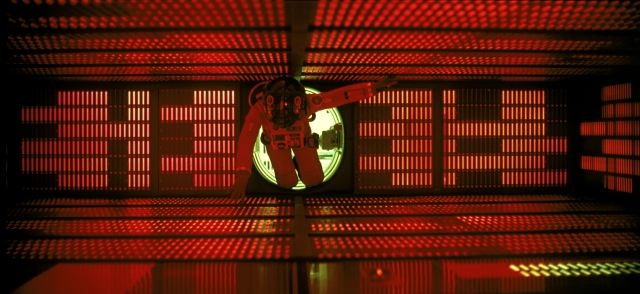
2001 remains a definingly Kubrickian mixture of neurotic specificity and compelling opacity, encouraging both close reading and wild-ranging interpretation. The film is certainly aged, sometimes by elements originally and paradoxically prescient. For example, the corporatization of space travel (ref Virgin Galactic) is predicted, although time would excuse the prominently featured Pan Am and Bell from any real race to the stars. Later, 1992 came and went without HAL becoming operational*, though IBM did lose $5 billion, ‘more than any US company has ever lost in a single year.’3 2001 itself passed by with only an affectionate nod in the naming of the 2001 Mars Odyssey spacecraft to mark it. And even 2010 was less The Year We Made Contact4 than the year we made Little Fockers.

2001-posters

2001 is also ageless, owing almost entirely to Kubrick’s stated aim to make it “basically a visual, nonverbal experience,” akin to music in its ability “to cut directly through to areas of emotional comprehension.”5 In essence, Kubrick meant that audiences should be active rather than passive participants in the experience of his film – that 2001 should be happening to you as much it’s happening to Dr David Bowman. When Christopher Nolan recently referred to his Interstellar (2014) as an “experiential”6 film – confusing a legion of sub editors and readers who decided he must mean ‘experimental’ – he was consciously evoking the intended experience of watching 2001.*

On the occasion of the Apollo 11 mission in 1969, WH Auden wrote a derisory poem, for publication in The New Yorker. In Moon Landing, he seems to dismiss the entire endeavour as a classic example of risible machismo (“an adventure / it would not have occurred to women / to think worth while”7). Indeed, a common analysis of 2001 bears that perspective out. As Camille Paglia opined, “From the first second that the first weapon is found – the weapon that is the tool, OK, that is the work of art – all these things were forced forward by male testosterone, and by a kind of homicidal impulse to create and to kill.”8 It’s the apes’ discovery of weaponry and violence that propels their evolution towards Man and, by extension, Man’s drive towards exploring (read militarizing) space.

Referring to Clarke’s novel of 2001 (created in parallel with the film and the product of close collaboration with Kubrick) will not prove anyone’s interpretation of the film – they are entirely distinct entities and the film should properly be considered a self-contained experience – but it often proves instructive. In the novel, it’s heavily implied that without the intervention of the monolith, the antecedents of Man would have perished, so unsuited were they otherwise to the harsh environment in which they lived. Conversely, while Clarke is confident that the famous, four-million-year spanning match cut from a thrown bone lands on “an orbiting space bomb, a weapon in space.”9, it’s not actually made explicit in the film, and deliberately so. Whether he intended to avoid comparison with his own Dr Strangelove (1964), or to fend against obsolescence in the face of impending treaties forfending the militarization of space, Kubrick’s overriding tendency was to discourage such a reductive interpretation – or at least to refuse its singularity.

2001b

On the other hand, Kubrick was never reluctant to ‘explain’ 2001, at least in terms of what is depicted on screen. In fact, he was positively forthcoming as far back as 1969:

“You begin with an artifact left on Earth four million years ago by extraterrestrial explorers who observed the behaviour of the man-apes of the time and decided to influence their evolutionary progression. Then you have a second artifact buried deep on the lunar surface and programmed to signal word of man’s first baby steps into the universe – a kind of cosmic burglar alarm. And finally there’s a third artifact placed in orbit around Jupiter and waiting for the time when man has reached the outer rim of his own solar system.

“When the surviving astronaut, Bowman, ultimately reaches Jupiter, this artifact sweeps him into a force field or star gate that hurls him on a journey through inner and outer space and finally transports him to another part of the galaxy, where he’s placed in a human zoo approximating a hospital terrestrial environment drawn out of his own dreams and imagination. In a timeless state, his life passes from middle age to senescence to death. He is reborn, an enhanced being, a star child, an angel, a superman, if you like, and returns to Earth prepared for the next leap forward of man’s evolutionary destiny.”10

That’s 2001, according to Kubrick, “on the film’s simplest level.”11 But what does it all mean? To one extent or another, 2001 is what you make of it. “Stanley wanted to create a myth,”12 explained Clarke, and both were eager for audiences to form their own philosophical interpretations. What some more recent filmmakers – *cough* Nolan *cough* – often miss is that the pursuit of science is much more often about posing questions than providing answers. Likewise, the cinematic experiences those filmmakers claim to aspire to should challenge us more than they comfort us. As Terry Gilliam once said, “The Kubricks of this world…make you go home and think about it.”13

Sean Welsh, 2014
This article was originally commissioned as a programme note by GFT.

* Early in Nolan’s film, Matthew McConaughey’s Cooper is aghast at a school teacher’s blithe assertion that the 1969 moon landing was faked – merely a ploy, she maintains (though an ingenious one, she grants) to bankrupt the Soviet Union. Kubrick, of course, has long been a key figure for conspiracy theorists convinced he was enlisted to fake the 1969 Moon landing, a belief stoked by determinedly ingenuous viewers of William Karel’s mockumentary Opération Lune (2002).


Footnotes

1. “Except for a single, very powerful radio emission aimed at Jupiter, the 4-million-year-old black monolith has remained completely inert…”
2. WH Auden, ‘Moon Landing’, New Yorker, 6th September, 1969 p 38
3. John Burgess, ‘IBM’s $5 Billion Loss Highest in American Corporate History’ in The Tech, 20th January 1993
4. 2010: The Year We Make Contact (Dir. Peter Hyams, 1984) was the Clarke-approved, Kubrick-uninvolved sequel.
5. Stanley Kubrick (1969), ‘An Interview with Stanley Kubrick’, interview with Joseph Gelmis in The Film Director as Superstar (Garden City, New York: Doubleday and Company, 1970)
6. Christopher Nolan (2014), ‘Christopher Nolan Breaks Silence on ‘Interstellar’ Sound’, The Hollywood Reporter, 15th November, 2014
7. Auden, ibid. 1
8. Camille Paglia, 2001: The Making Of A Myth (Dir. Paul Joyce, 2001)
9. Arthur C Clarke, 2001: The Making Of A Myth (Dir. Paul Joyce, 2001)
10. Kubrick, ibid. 5
11. Kubrick, ibid. 5
12. Clarke, ibid. 9
13. Terry Gilliam, TCM interview, ‘Terry Gilliam criticizes Spielberg and Schindler’s List

Posted in Cinema, Film, GFT, Glasgow, Movies, Programme Note | Tagged , , , , , , , , , , , | 1 Comment

The Double (2014)

the-double-2

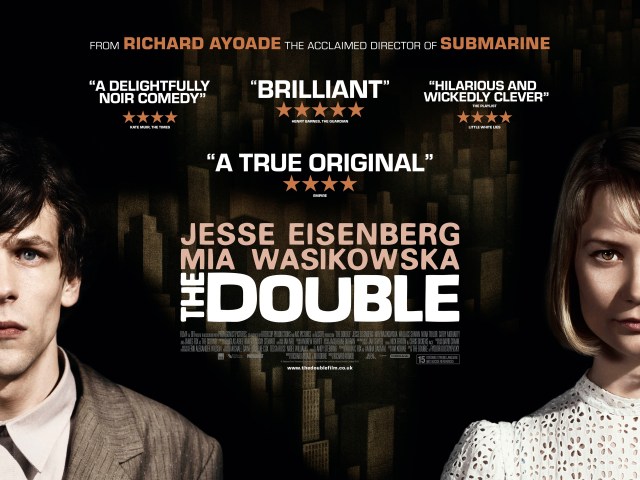
The Double (2014) is Richard Ayoade’s second feature-length film. Since reading law at Cambridge, where he also served as president of the storied Footlights theatrical club, Ayoade has made a steady ascent, via a stint starring in a beloved sitcom (The IT Crowd), to becoming one of the most promising young directors working in Britain today. Even more impressively, the term “auteur” has begun to be tossed around him, though Ayoade has just two films to his name. And yet, still best known as an actor whose diffident public persona is built on the foundations of his IT Crowd character, Maurice Moss, Ayoade seems to shy from self-aggrandisement. As an authorial presence, his absence is telling, not to say deliberate. However, there are certain thematic concerns threaded through his work that may, in the future, justify the adjective ‘Ayoadian.’

Fittingly, it seems to have become difficult to discuss Ayoade’s second feature film, The Double, without employing a litany of cinephile references, while evoking a veritable who’s who of world cinema. This is partly a result of Ayoade’s own unrestrained, highly literate and self-conscious cinephilia – in interviews, he frequently tosses in casual but considered references to Kaurismäki, Kieślowski, Kubrick, et al – and it’s also the logical evolution of a trend that began with Ayoade’s debut feature, Submarine (2010).

the-double-uk-poster

Submarine self-consciously evoked French New Wave cinema but also often provoked comparisons to the more contemporary oeuvre of Wes Anderson, with its highly-controlled mise-en-scene and preoccupation with precocious, pretentious adolescence. Submarine was based on a novel (by Joe Dunthorne), and so The Double is too – Dostoevsky by way of Harmony Korine’s brother, Avi, who shares co-writer credit with the director. The oppressive retro-futuristic milieu Ayoade has conjured for The Double, which superficially seems far-removed from the cozy Welsh environs of Submarine, has frequently drawn comparisons to the dystopian vision of Brazil (dir. Terry Gilliam, 1985).

It’s telling that neither comparison sits well with Ayoade, who prefers to refer to the subjectivity of Taxi Driver (dir. Martin Scorsese, 1976) when elucidating his approach to both Submarine and The Double, while claiming that Brazil’s aesthetic was only an influence in the negative – something to consciously avoid, however successfully – and that, anyway, he prefers Fear And Loathing In Las Vegas (1998). Less remarked upon, perhaps, is the attention paid to the sound design of The Double, which recalls the immersiveness of David Lynch and Alan Splet’s work on Eraserhead (dir. David Lynch, 1977), in both approach (reportedly five months was spent on the sound alone) and effect.

the-double-2

While refreshingly erudite and generally unafraid to discuss his films in intellectual terms, and with reference to a creditable working knowledge of cinema history, Ayoade seems loathe to be painted a mere stylist – characteristics and preoccupations the director shares with fellow director Quentin Tarantino. Discussing matters of homage, Ayoade has referred to Tarantino’s refutation of his own supposed visual quotation of John Ford’s The Searchers (1956), wherein the Kill Bill director argued the perceived homage was simply an aesthetically pleasing shot he could and would have come up with regardless. Ayoade has cited Tarantino as a formative influence as often as Louis Malle and it’s instructive beyond anecdotal that the episode he directed of TV’s Community, ‘Critical Film Studies’, revealed itself to be an homage to My Dinner With Andre (dir. Louis Malle, 1981) superficially disguised as a Pulp Fiction tribute.

As the recent Frances Ha (dir. Noah Baumbach, 2012) blithely incorporated quotes from the likes of Mauvais Sang (dir. Leos Carax, 1985) alongside its more overt nods to the French New Wave, so Ayoade’s films sometimes overtly, sometimes subtly, perhaps even accidentally, evoke the spirit of cinema past, which of course is in some ways eternally the present. But, in a fashion similar to Adaptation (dir. Spike Jonze, 2002), the form of which becomes dictated by the concerns of its protagonist, shifting from complex psychology towards a stock action-thriller ending, Ayoade’s films generally and actively derive form from content.

the-double-3

Submarine opens with the voiceover dialogue, “Most people think of themselves as individuals, that there’s no-one on the planet like them. This thought motivates them to get out of bed, eat food and walk around like nothing’s wrong.” The speaker, Oliver Tate (Craig Roberts), is a precocious adolescent attempting to construct a persona for himself. The mise-en-scene of the film internalises that concern – Submarine’s homage to the films of the French New Wave derives from the subjective perspective the audience shares with the protagonist – to wit, Oliver’s early assignation with love interest Jordana (Yasmin Paige) is played out as a self-conscious homage to Le Samouraï (dir. Jean Pierre Melville, 1967), a poster of which hangs in Oliver’s bedroom.

Throughout Submarine, Oliver’s narration informs the self-reflexive construction of the film, as he conjures a fade to black or imagines the film of his life capturing a key moment with a dramatic crane shot – or, he correctly predicts, with the substitution of a cheaper zoom out. “I find that the only way to get through life is to picture myself in an entirely disconnected reality,” he says, adding, “I often imagine how people would react to my death.” In a brief moment, Oliver conjures a vision of his own doppelganger (dressed as his father), who attempts to drown him in the bath.

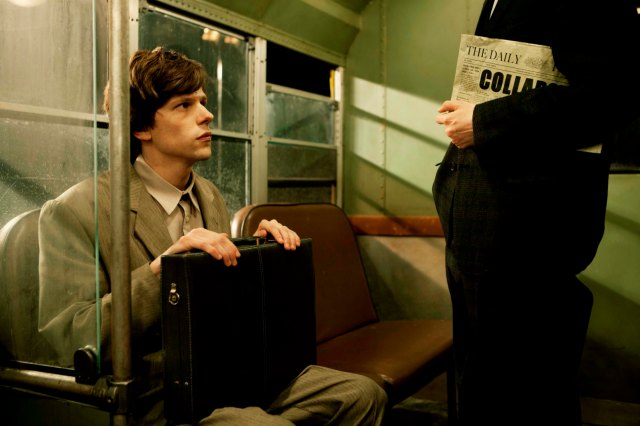
That brief moment is exploded in The Double, which immerses its lead in an even more artificial world, reflecting both the fantastical nature of its conceit and the oppressive psychological forces its protagonist, Simon James (Jesse Eisenberg), labours under. While Oliver presides over his own story, Simon’s constructed persona is externalized, terrorizing him and, by extension, us. His initial lack of agency and his existential dread imply he’s not in control of his own environment. And yet, if we can consider Submarine a lucid dream, where Oliver controls the parameters of his own experience, then The Double is a nightmare, wherein Simon is the director of his own suffering, everywhere and nowhere at once.

Sean Welsh, April 2014
This article was originally commissioned as a programme note by GFT.

Posted in Cinema, Film, GFT, Glasgow, Movies, Programme Note | Tagged , , , , , , , , , , , , , , | Leave a comment

The Selfish Giant (2013)

tsg2

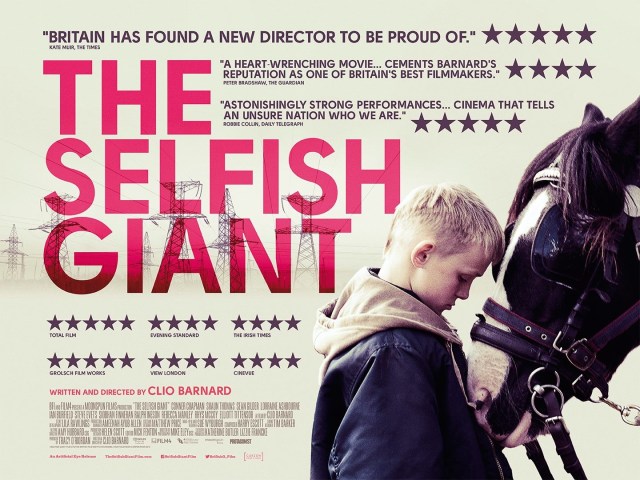
The Selfish Giant (dir. Clio Barnard, 2013) is the director’s second feature-length film, after 2010’s celebrated The Arbor. Barnard’s film is self-consciously in a lineage with Bicycle Thieves (Dir. Vittorio De Sica, 1948), Kes (Dir. Ken Loach, 1969) and The Apple (Dir. Samira Makhmalbaf, 1998) intended, in the director’s words, to be “a film in the realist tradition of fables about children.”1 ‘Inspired by’ Oscar Wilde’s short story, Barnard has realised the original, allegorical tale with a stark social realism – a potentially contradictory combination, but successful and in keeping with the director’s previous work. Barnard, aware that one kind of cinema is no more inherently ‘truthful’ than another, draws on extensive research and the performances of non-professional actors, but imbues her film with poetic imagery and a consistent authorial tone.

Wilde’s The Selfish Giant, found in his short story collection The Happy Prince and Other Tales, is a fable with explicitly Christian themes. In it, the central character builds a wall around his garden, in order to keep the children who like to play there from getting in. His garden falls into winter until the children manage to sneak back in, whereupon the giant recants and decides to take down the wall. However, the children run away from him when he reappears – all except one, who he helps climb a tree. When the giant knocks down the wall, the rest of the children return, but the tree-climber is now notably absent. Years later, under another tree in his garden, which the giant has never seen before, he encounters the boy again, this time bearing the stigmata. This is the Christ Child, who tells him that just as the giant once let Him play in his garden, “to-day you shall come with me to my garden, which is Paradise.”

tsg

Barnard’s The Selfish Giant is also a fiction with an explicit moral, but rendered with a documentary-like verisimilitude. As the director has said, she wants the audience “to be aware of all the different levels of representation there are when a camera is used and how elusive the truth is… That’s why I wanted to keep the title, which references a fairytale, to make it explicit that this is also a fable about childhood.”2 Almost immediately, the director establishes this tone with a shot of two children, Arbor and Swifty, silhouetted riding horseback, midframe on a landscape recalling the cut-out animation style of The Adventures of Prince Ahmed (Dir. Lotte Reiniger, 1926). In this way, Wilde’s original fable becomes just slightly more than a framework for Barnard’s project.

The Selfish Giant also contains a number of seemingly superficial allusions to Barnard’s feature debut, The Arbor – the lead character’s name for one, and the nickname Kitten (which in The Arbor belongs to an even less respectable, real-life character). The Arbor, also set in Bradford (Barnard grew up in nearby Otley), was inspired by the life and work of playwright Andrea Dunbar, author of Rita, Sue and Bob Too (Dir. Alan Clarke, 1987). The Arbor drew attention to its artifice as a documentary film, taking inspiration from Dunbar’s use of direct address in her plays, reminding the audience they were watching a film through the device of having actors lip-sync to recordings of Dunbar, her family and associates.

tsg1

“Through these formal techniques,” the director has explained, “I hoped the film would achieve a fine balance – so that, perhaps paradoxically, the distancing techniques might create closeness, allowing push pull, so an audience might be aware of the shaping of the story but simultaneously able to engage emotionally.”3 The Arbor, apart from being formally audacious, communicates deeper concerns than a straightforward biopic, as Barnard concluded: “This is an important time to reflect on the complexity of circumstances that lead to neglect and abuse and our collective responsibility to the most vulnerable in society.”4

The Selfish Giant represents an evolution of the same preoccupations, formally and intellectually, and seeks a similar balance between reality and fiction in order to provoke an emotional and intellectual response from the viewer. Barnard’s experiences researching and filming The Arbor led directly to The Selfish Giant, while she also drew on her short film, Road Race (2004), which focused on the Traveller tradition of horse-drawn road racing.

tsg4

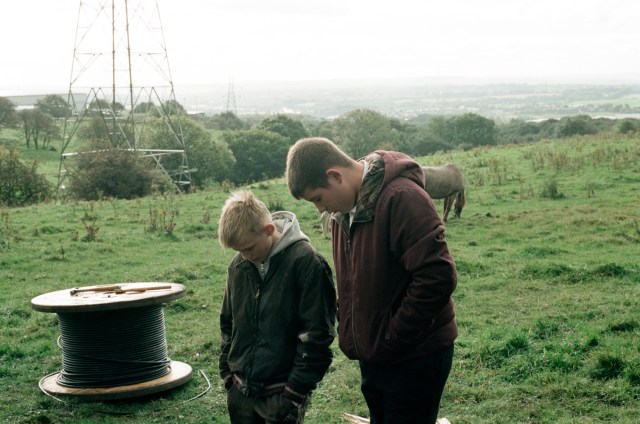
Observing the social exclusion of children on the Bradford estates (“marginal in marginalized communities”5), Barnard noted the resonances with Wilde’s story, which she already had ambitions to adapt. Learning of the practice of scrapping and the opportunistic scrapyard owners who profited from the enterprise, the director found an analogue for the titular giant. The children, meanwhile, have direct real life counterparts: Barnard met the boy who inspired Arbor (Connor Chapman) while conducting workshops in a local school and drew heavily upon elements of his life.

Barnard’s decision to tell her story from the children’s point of view means her film diverges notably from Wilde’s tale, the moral of which is clearly the giant’s to learn. In retaining the title, Barnard underlines, as she has said, the fairy tale aspect of the story, but also complicates identification of the titular monster. The Selfish Giant can be, most obviously, Kitten, whose selfish opportunism and exploitation precipitates tragedy. It can be Arbor himself, whose single-minded pursuit of self-improvement is equally, if forgivably, culpable (the irony implicit in the nickname ‘Kitten’ could arguably also apply to the scrappy but slight Arbor).

Or it can be the State, the disregard of which has left the community to rot, enshrouded, in Barnard’s conception, by mist and enveloped with overgrown weeds. In balancing ragged, heartbreaking authenticity with a timeless, fabulous atmosphere, it’s the tacit acceptance of an ideology of selfishness and greed that is revealed to be Barnard’s true target, as relevant now as ever while transcending the specificity of time and place.

Sean Welsh, October 2013
This article was originally commissioned as a programme note by GFT.


Footnotes

1. Clio Barnard, interviewed by Sean O’Hagan in The Observer
2. Ibid.
3. Clio Barnard, Director’s Statement for The Arbor
4. Ibid.
5. Ibid.

Posted in Cinema, Film, GFT, Glasgow, Movies, Programme Note | Tagged , , , , , , , , | Leave a comment