EIFF REVIEW: The Legend of Barney Thomson (2015)

91974

Pitchy is probably the best word for Robert Carlyle’s The Legend of Barney Thomson, the opening film of 2015’s Edinburgh International Film Festival. Having made the not unusual (nor unforgivable) choice to direct himself in the title role, Carlyle delivers a comedy jet black in tone, built around an inconsistent lead performance. Based on the first of Douglas Lindsay’s Barney Thomson series (which now runs to seven novels and four novellas), it’s the comic story of a diffident Glaswegian barber (Carlyle) who stumbles into a bloody murder spree, provoking the attention of a dogged, English policeman (Ray Winstone). It’s a sturdy foundation for Carlyle to construct what is ultimately an assured debut, countering cliché with wit, style and a strong script.

First of all, Carlye’s film looks lovely, establishing early on a warm palette of worn brown and late-in-the-day sunshine to complement an early ’60s mise-en-scene. Opening the story in a retro Bridgeton barber specialising in vintage seats, warm towels and razor cuts, belies the films modern day setting. In fact, it’s not until the dialogue starts giving clues (“Last time I had a bird, Shakin’ Stevens was at number one”; a fleeting reference to Angie and Brad) that the time period becomes clearer. Despite that, the creditable production design seems to deliberately muddy the waters, concealing smaller detail – such as a newspaper clipping with a conspicuously vintage advert on the back – in plain sight, while all the coppers all rock a style a good deal sharper than any of their real world counterparts ever could. The soundtrack favours 1960s music of the not-completely-overplayed variety and, similarly, Carlyle makes good use of an inventive local eye for underused Glasgow locations. Overall, there’s a welcome sense of place and Carlyle and his team also get the best of familiar landmarks, most notably the Barrowland Ballroom. Generally, The Legend of Barney Thomson suggests Carlyle has the confident, steady hand and keen eye for collaborators necessary to segue effortlessly to a career on the other side of the camera.

Which is good, because the film only really wobbles when, straddling the two positions, his performance seems to bear the strain. His characterisation of Barney reaches an overwrought panto pitch in an early scene, a moment awkwardly balanced later on when Carlyle calls on a familiar casual charm for a short, desperate and solitary monologue, the delivery of which doesn’t jibe at all with the character he’s set up. Barney’s problems stem from the fact he’s an short-fused oddball with “no chat”, and the transition to grinning “legend” isn’t completely earned. There’s a sense that while Richard Cowan and Colin McLaren’s script is perfectly solid, Carlyle on his best day would have conjured a more credible arc from it.

Presumably taking a lead, if not overt direction, from Carlyle, his cast’s performances range from reliably solid to full-blown panto and to all points in between. Tom Courtenay nearly steals the show in an extended cameo as the irascible Chief Superintendent McManaman, while Ashley Jensen is on the right side of overwrought, hilariously, as Winstone’s nemesis, DI June Robertson. Winstone himself could perform his role with his eyes closed, but on the other hand is a perfect fit for it. Emma Thompson, in heavy make-up as Barney’s elderly mother, is nothing if not game, but perhaps a little too luxuriant in her Glaswegian vowels to be completely convincing in an admittedly pretty broad role (compare and contrast how effortlessly Tilda Swinton seemed to disappear into her Yorkshire crone for Snowpiercer). The cast is filled out by a host of recognisable faces and though there’s a sense Carlyle could easily have pulled up in a white van by a crowd of itinerant Glaswegian actors (jobs today for Stephen McCole, Martin Compson, James Cosmo, Barbara Rafferty and Brian Pettifer), everyone acquits themselves ably.

The film’s climax does stretch credulity, even after a range of twists and turns, but the script is artful enough to address the strain in dialogue and just about scratches by on its wit. Squint and you may even perceive a bit of satire on Police Scotland’s recent rural trajectory, but ultimately the film is built more for laughs than verisimilitude or incisive commentary. Pitchy performances aside, though, the biggest criticism of The Legend of Barney Thomson is that it doesn’t really wring out either the comic potential or the plumb the absurd depths of its more risqué, grotesque or potentially bizarre elements. However, its poise, humour and general exuberance make it a worthwhile, not to say very promising, debut.


The Legend of Barney Thomson is on general release from 24th July, 2015.

Posted in Edinburgh, EIFF 2015, Glasgow, Reviews | Tagged , , , , , , , , | 1 Comment

EIFF 2015: Feature Picks

The selection of genre films in Edinburgh International Film Festival’s 2015 programme is pretty mouthwatering – there’s Maggie, One & Two, Parasyte: Part 1 and Redeemer to name but a few – so, just like the docs and the retro picks, this was a tricky selection. Anyway, you’ll be delighted to hear I managed to get it down to a relatively arbitrary in length but utterly bulletproof (give or take a Swung) top five. Here’s my picks of EIFF’s feature-length fictional films, presented here in order of their first screening:

1. Koza (dir Ivan Ostrochovský, 2015)

18/06, 18:15 at Odeon | 21/06, 13:55 at Filmhouse 3

This drama fronted by retired Romany boxer, Peter Baláž, nicknamed “Koza” (“Goat”), mixes real life with fiction. Baláž for-real represented Slovakia at the 1996 Atlanta Olympic Games and has since fallen on harder times. Ostrochovský, a documentarian grew up in the same town as Baláž, got to know him while making a short doc about him, then conceived Koza in part to help him out financially. By all accounts, it’s a beautifully shot, semi-autobio-tragicomic tale, described variously as bruising, melancholy and bleakly humorous (read: not coming to Cineworld anytime soon).

2. Cop Car (dir Jon Watts, 2014)

19/06, 20:35 at Cineworld | 24/06, 18:20 at Cineworld

This is director Jon Watts’ second feature after last year’s Clown (2014), which you might have caught as part of FrightFest at Glasgow Film Festival earlier this year. Without wishing to damn it with faint praise, Clown was a respectable rendering of a why-has-no-one-done-this-before idea. The genius of it, though, was in how Watts and cohort Christopher D Ford got it made off the back of a fake trailer, which they cheekily attributed to Eli Roth. Cop Car has an equally appealing premise – two 10-year-old kids stumble upon an abandoned cop car and take off with it – and reportedly delivers in ways that Clown didn’t quite. It also boasts a moustachioed Kevin Bacon, who has apparently resolved whatever visa issue left him trapped in London doing ads for EE. Bacon seems to be having much more fun here, as the corrupt sheriff who left something seemingly grim in the trunk, and Cop Car’s superior b-movie execution has drawn nothing but praise so far.

3. Swung (dir Colin Kennedy, 2015)

19/06, 20:45 at Cineworld | 21.06, 13:00 at Cineworld

Swung poster

This is the world premiere of Colin Kennedy’s adaptation of Ewan Morrison’s Glasgow-set novel about a middle class couple, struggling in the way that those do, who turn to swinging to turn their doomed lives around. Irvine Welsh described the novel as a “beautifully crafted, completely realised and often inspirational book,” one which announced Morrison “as one of the most interesting and exciting voices to emerge in Scottish fiction in recent years.” Is it perhaps the kind of “Scottish Woody Allen” film the director of Not Another Happy Ending (EIFF 2013) was attempting to evoke (“Young, I guess you would call them middle-class people, having complications in love and life in an urban environment”), but didn’t quite live up to? Optimistically, Swung could make prove that idea to be a good thing, though the filmmakers seem to be keeping such proclamations to themselves so far. There’s no trailer yet, but EIFF have a short clip, featuring the two leads and Elizabeth McGovern, on their site here.

4. Turbo Kid (dir Anouk Whissell, François Simard, Yoann-Karl Whissell, 2015)

21/06 23:00 at Filmhouse 1 | 23/06 20:40 at Cineworld

It’s difficult to find fault in Turbo Kid‘s premise. The trio of Quebec directors, known collectively as RKSS (Road Kill Super Stars), are paying tribute not to your mainstream post-apocalypse films (Mad Max, etc), but all their B-movie knock-offs, VHS favourites and a very particular strand of kid/teen flicks that reached their apotheosis in the 1980s – e.g. BMX BanditsPrayer of the Rollerboys, Gleaming The Cube, even The Wizard. /Film set it up pretty well: “Imagine what a movie might look like if it came from the mind of a ten-year old kid from the ’80s who is obsessed with Mega Man, and who just saw the Mad Max movies for the first time.” If none of that means anything to you, congratulations, the future belongs to you. But, in the meantime, this film is mine, all mine.

5. Liza, The Fox Fairy  (Liza, a Rókatündér, dir Károly Ujj Mészáros)

25/06, 18:00 at Odeon | 26/06, 20:45 at Cineworld

A big hit in its native Hungary, this supernatural comedy drama feature seems to splice Amélie, Wes Anderson and the lighter-hearted, more fantastical end of Takashi Miike’s oeuvre. By all accounts, it’s charming, funny and lives up to it’s odd synopsis – a 30-year-old nurse (Mónika Balsai) living in Csudapest, the capital of a fictionalised version of 1970s Hungary, becomes convinced she’s a demon from Japanese mythology who spells death to all suitors. She’s aided and abetted in this possible delusion by her only friend, the ghost of Tomy Tani, a Japanese singer from the 1950s. When her live-in patient dies and the body-count begins to escalate, she’s investigated by the police, one of whom becomes her flatmate and begins to fall ominously in love with her. If it manages to stay on the right side of knowing – which, again, by all accounts it does – Liza, The Fox Fairy looks like a wee gem.

Edinburgh International Film Festival 2015 runs from 17th-28th June. This is the third of three EIFF preview blogs. Read my picks of the documentaries here and my picks of the old films screening again at EIFF 2015 here. Check out EIFF’s 2015 brochure here.

Posted in Edinburgh, EIFF, EIFF 2015, Preview | Tagged , , , , , , , , , , , | 1 Comment

EIFF 2015: Retro Picks

We’ve seen already how Edinburgh International Film Festival’s documentary strand this year is an embarrassment of riches, but turns out it’s a gala year for looking back too. Without further ado, here’s my picks from the old films screening again at EIFF 2015:

1. Walter Hill: The Early Years Retrospective 1975-84

18-28/06, various times at Filmhouse

One of my favourite EIFF memories is 2009’s Roger Corman retrospective. If memory serves, there was a Corman film every day, early afternoon in Filmhouse 1, and Corman himself even poked his head into The Trip to provide some impromptu director’s commentary from the rear (Joe Dante was there that year too, for an In Person, and provided his personal print for Corman’s The Intruder). All that’s to say that EIFF really know how to do retrospectives and this year’s focus on the early (best) years of Walter Hill seems set to be an instant classic. It’s hard to pick a highlight from an undeniably world-class run, including The Warriors, which should need no introduction, Southern Comfort, the thinking man’s Deliverance and The Driver, which was curiously, criminally ignored in favour of Michael Mann’s Thief when all the love was being poured on Drive a few years ago. But, if you can only see one, make it the underdog, the lost classic, the rock ‘n’ roll fable to end them all, Streets of mother-fucking Fire!

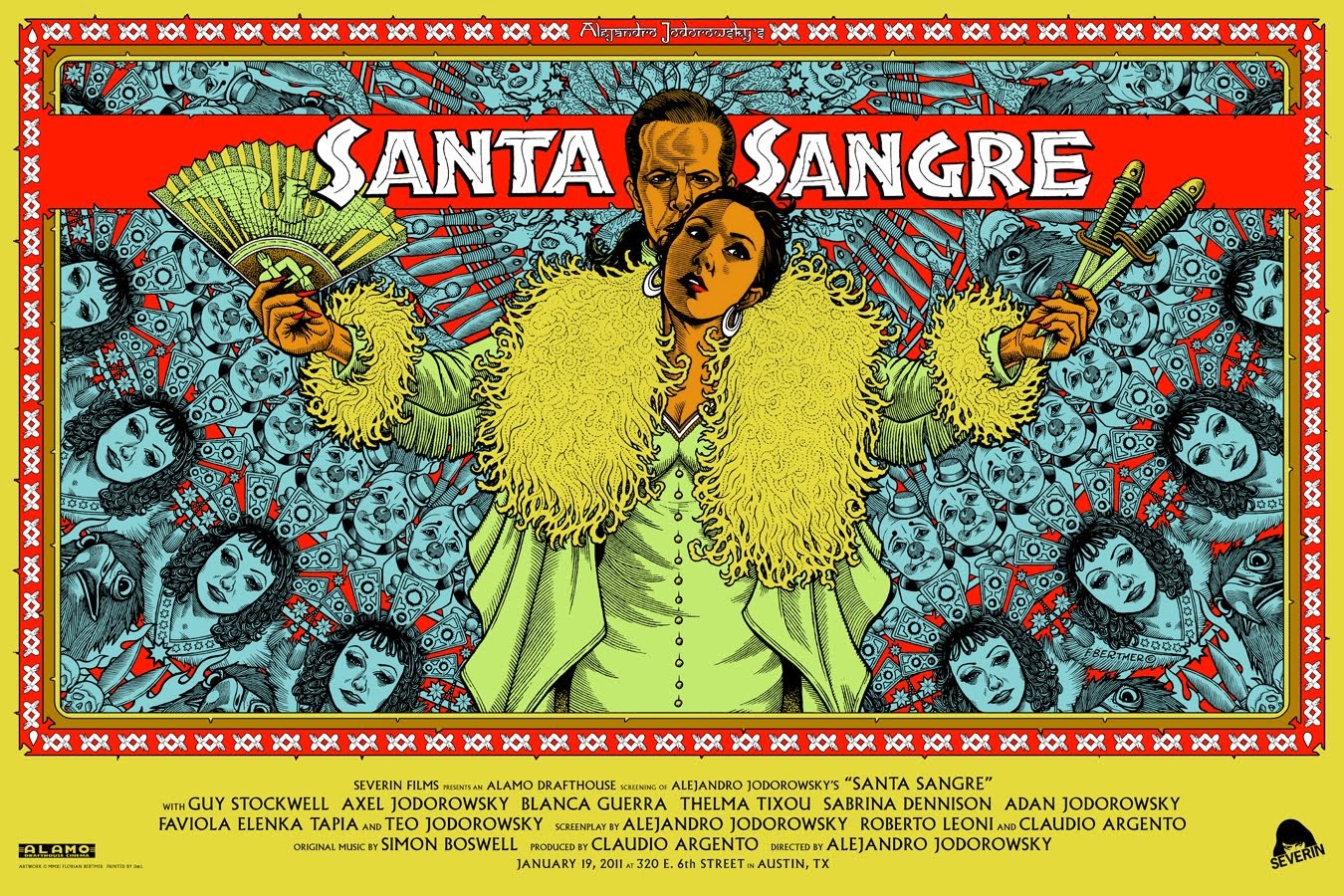
2. Santa Sangre (dir Alejandro Jodorowsky, 1989)

27/06, 23:10 at Filmhouse 2

Santa Sangre poster by Florian Bertmer

Santa Sangre poster by Florian Bertmer

Alejandro Jodorowsky made his name as the undisputed godhead of psychotronic cinema over 40 years ago, with El Topo (1970) and The Holy Mountain (1973). However, before his recent resurgence, sparked by the documentary Jodorowsky’s Dune, the psycho-horror Santa Sangre (Holy Blood, 1989), represented a late flicker in a stop-start career that seemed to be burning out for good. The film broke an 11-year lull since the impersonal and compromised Tusk, and Jodorowsky immediately followed it with 1990’s The Rainbow Thief, another impersonal and compromised film which he immediately disowned. Jodorowsky then abandoned filmmaking altogether until his triumphant return with The Dance of Reality, some 23 years later. So Santa Sangre is an orphan among orphans – surreal, psychotic, bloody and magical – a masterly work that deserves to be seen on the big screen.

3. Roar (dir Noel Marshall, 1981)

18/06, 23:30 at Filmhouse 1

I don’t know how this film could have been out of circulation for so long, but then I’d never even heard of it until the US-based Drafthouse Films announced its re-release last year. Described as “the most dangerous film ever made”, it features Hitchcock star Tippi Hedren and then-husband Noel Marshall, who wrote, directed and starred in the frankly incredibly reckless project. Marshall’s thin narrative is based upon their living side-by-side with a range of wild animals – namely 150 lions, tigers, leopards, jaguars and elephants. Melanie Griffith, Hedren’s teenage daughter, quit the production for a time, saying she didn’t want to come out with “half a face”. The future Working Girl eventually returned to set, only to be mauled by a lion who left a wound requiring 50 stitches. Hedren is reportedly unimpressed with the re-release, but I think it sounds just grrreat.

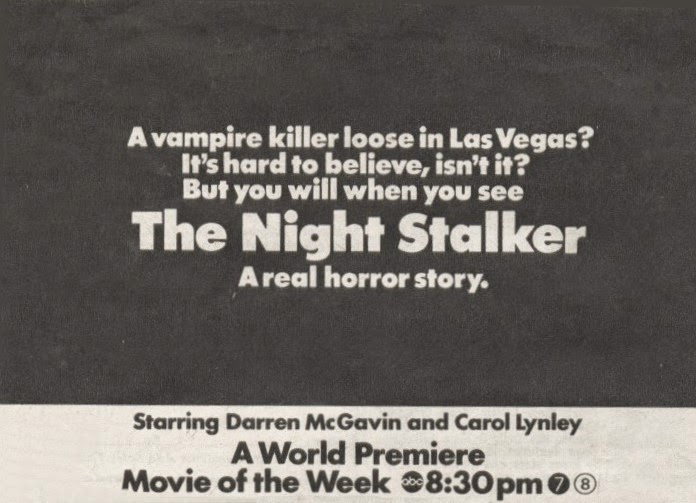
4. The Night Stalker (dir John Llewllyn, 1972)

21/06, 20:45 at Filmhouse 3

night stalker

The Night Stalker is screening as part of EIFF’s Little Big Screen strand, celebrating the USA’s unusually cinematic televisual output of the late 1960s and early 1970s. The 1972 TV movie, adapted by author Richard Matheson from an unpublished novel by Jeffrey Grant Rice, was such a success it inspired a sequel, The Night Strangler and a short-lived series, Kolchak: The Night Stalker, which became one of the key inspirations for The X-Files. An investigative journalist (Darren McGavin) tracking a serial killer through Las Vegas struggles to persuade authorities of his increasingly out-there suspicions. It’ll be an exciting, not to say rare, experience to see something like this in a cinema, and a tough choice over Tobe Hooper’s Salem’s Lot, also screening. I mean, go and see them both if you can, moneybags.

5. Fritz the Cat (dir Ralph Bakshi, 1972)

26/06, 20:40 at Filmhouse 2

A counter-culture classic immune, unlike so many, from mainstream recuperation, Fritz the Cat was inspired by Robert Crumb’s 1960s comic strip and was the first animated feature to be given an X certificate. Despite that perceived handicap, renowned animator Ralph Bakshi’s debut film eventually earned $90 million worldwide. Bakshi, who will be joining the audience via Skype for a post-film chat, is also known for 1977’s cult classic, Wizards and his 1978 Lord of the Rings adaptation (both screening at EIFF) as well as the incendiary, often misunderstood Coonskin (1975). Also the live-action/animation hybrid Cool World (1992). Remember Cool World? Anyway, Bakshi is a bona fide living legend, so his (virtual) appearance alone is worth the price of admission.

Edinburgh International Film Festival 2015 runs from 17th-28th June. Check out the brochure here and peruse my picks of EIFF 2015’s documentaries here.

Posted in Edinburgh, EIFF, EIFF 2015, Preview | Tagged , , , , , , , , , , , , , | 2 Comments

EIFF 2015: Documentary Picks

It’s a really strong year for documentaries at EIFF, making this a pleasingly tricky shortlist to formulate. Luckily, I could care less about the high-profile Amy Winehouse doc, Amy (though director Asif Kapadia’s Senna was engaging enough). It was tougher to jettison two films about comedy that I wouldn’t like to miss, namely Kevin Pollack’s Misery Loves Comedy and Douglas Tirola’s Drunk Stoned Brilliant Dead: The Story of the National Lampoon and, hard as it was, I’ve also cheated with two music docs in joint fifth place. Here’s my picks of EIFF’s docs:

1. Remake, Remix, Rip Off (dir Cem Kaya, 2014)

21/06, 20:35 at Cineworld | 28/06, 13:40 at Cineworld

I couldn’t not pick this, though I’m 100% sure it’ll be fantastic. I’ve written before on the strange phenomenon of Turkish Remakesploitation and found research materials pretty thin, to non-existent, especially in terms of first person accounts. I can say with confidence, then, that this is not only a long-overdue excavation of a fascinating period of world cinema but it’s also a compelling tale of gung ho creativity and extreme cheekiness, which should really appeal to absolutely everyone. Director Cem Kaya is attending the screening on Sunday 21/06.

2. The Wolfpack (dir Crystal Moselle, 2015)

26/06, 20:30 at Filmhouse 1 | 27/06, 20:50 at Cineworld

The Angulo brothers seem like a gift to a documentary maker. Home-schooled and living on welfare in Manhattan, cut off from society by a father for whom overbearing seems insufficient to describe, they kept themselves sane by re-enacting movies, one of their few links to the outside world. An intriguing story, an enthralling trailer and a ton of good press so far means The Wolfpack is a must-see.

3. Future Shock! The Story of 2000AD (dir Paul Goodwin, 2014)

22/06 20:30 at Filmhouse 1 | Screening as a double bill with Dredd in 3D

I was first exposed to 2000AD as a kid in the mid 80s when someone’s subscription was accidentally delivered, shrinkwrapped to my house. Being a wee dick, I ripped it right open. It was eventually discovered and returned, but by then my brain had been rewired and I’ve been a fool for comics ever since. So I’m sure this doc will be personally enthralling, but 2000AD has always been much more than a gateway drug. It was a full-on sensory insurrection, pages ripping with ideas and visual invention, subversive, iconoclastic and, more often than not, funny as fuck – a national treasure on a par with the NHS.

4. Chuck Norris Vs Communism (dir Ilinca Calugareanu, 2015)

24/06, 21:00 at Odeon 2 | 25/06, 18:15 at Odeon 4

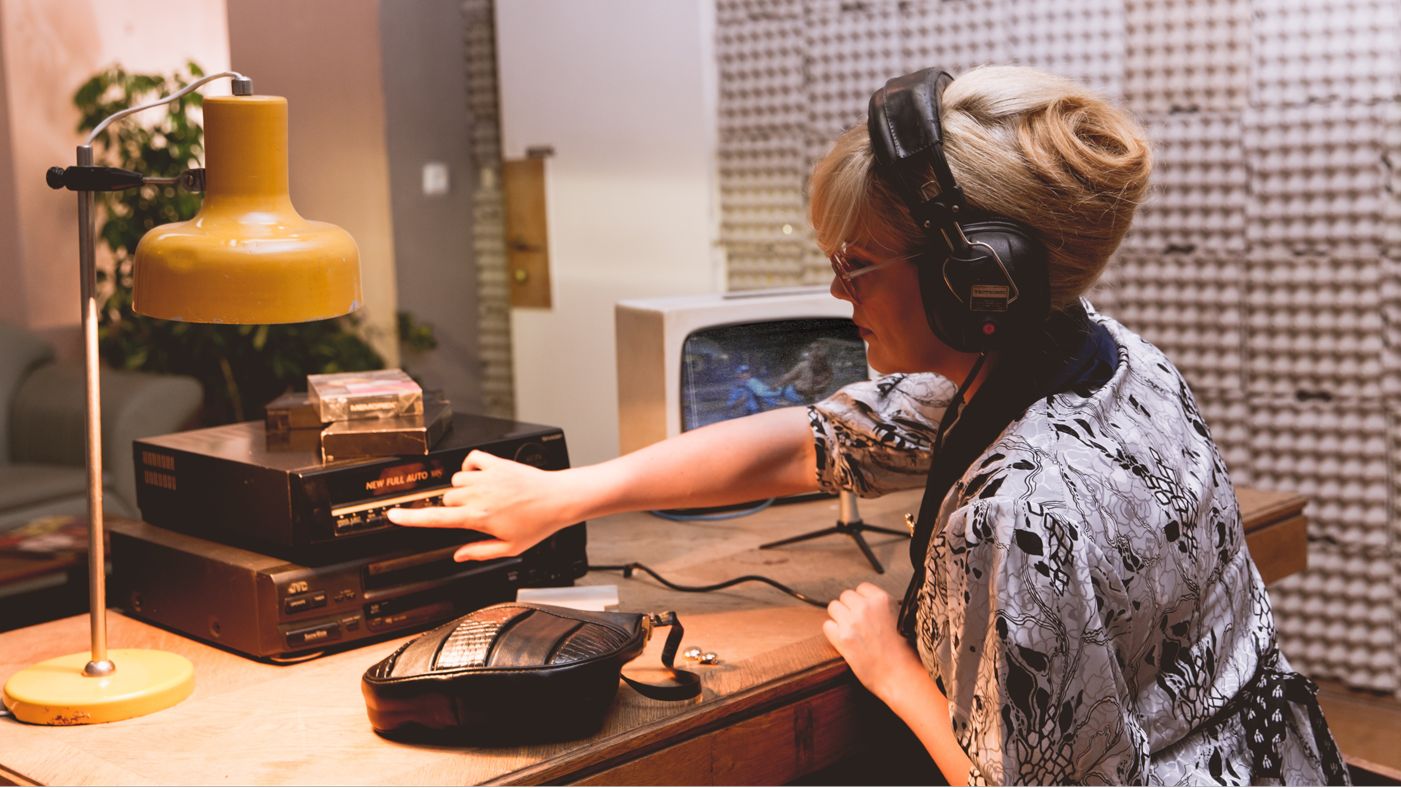
chuck

I first read this story in SoFilm last year, and though a lukewarm Guardian review (god forbid) out of Sundance has slightly taken the edge off of my anticipation, I’m still very excited about it. In 1980s Romania under Ceausescu, western films were impossible to see, certainly in their original, uncensored form. A mysterious chap called Zamfir took it upon himself to smuggle VHS tapes in, hiring a woman named Irina Margareta Nistor to re-dub all the dialogue, and then distributed them in their thousands on the black market. So this is the story of how Chuck Norris undermined the Ceausescu regime while a generation of Romanians became happily familiar with the mysterious, disembodied voice of a valiant state translator.

= 5. Big Gold Dream: Scottish Post-Punk and Infiltrating the Mainstream (dir Grant McPhee, 2015)

19/06, 20:00 at Filmhouse 1 | 23/06, 20:25 at Belmont | 27/06, 18:10 at Odeon

This is a world premiere, and a perfect choice for EIFF. It tells a version of the Scottish post-punk story which encapsulates the mutant pop ethos of Fast Product as much as the already constantly re-affirmed prevalence of Postcard et al. Fast Product, founded by Bob Last (before Rough Trade and Factory), released a ton of amazing music by everyone from The Mekons to early Human League to the Dead Kennedys, but also by local up-and-comers like Scars. Having grown up late, pre-internet and far away (Prestwick), I only found about Scars and Fast Records a number of years ago and then I was kind of angry that they seemed to have been hidden from me by the myth-makers. Bit disappointed to see Alan McGee’s ever-punchable face in the trailer, of course, but this will be a fascinating and hopefully inspiring history fix.

= 5. Imagine Waking Up Tomorrow and All Music Has Disappeared (dir. Stefan Schwietert, 2015)

24/06, 18:15 at Cineworld | 27/06, 15:45 at Odeon

Erstwhile KLF/K Foundation founder Bill Drummond is the star of this doc, which focuses on his current project The17 while providing “some exclusive commentary” on his body of work to date. I’m going to be a little sceptical how thorough a consideration of the iconoclast’s career this will be. The KLF deleted their back catalogue and burned £1 million in cash, so it wouldn’t be shocking if Drummond resisted dwelling on his past too much. Luckily and unsurprisingly, his current endeavour is fascinating in itself. The advent of the iPod, which he greeted enthusiastically, had unexpected consequences for Drummond, who explained, “Nothing seemed to satisfy, even though in theory I had every recording on it that I had ever wanted to listen to”. He concluded, therefore, that “all recorded music has run its course”. His response was the17, a choir of constantly-shifting membership who perform only for themselves, are never recorded, and eschew scores in favour of instructions from Drummond. Much more interesting than a bunch of sun-glassed talking heads mumbling about how shit a business it is.

Edinburgh International Film Festival 2015 runs from 17th-28th June. Check out the brochure here.

Posted in Edinburgh, EIFF, EIFF 2015, Preview | Tagged , , , , , , , , , , , | 5 Comments

Copywrongs

“I moved to America for one reason, and that was freedom of speech and freedom of expression, and if someone thinks they’re going to take that away from me, they’re insane!”

Adi Shankar, Bootleg Universe producer

When we think about ripped-off movies, we’re usually thinking of either poor quality bootlegs (If you can remember VHS, you can probably remember, “that’s your tracking, mate, tracking’s touchy”) or movies that steal conceptually and/or aesthetically from other movies (or “properties”). Nowadays, the former has been largely supplanted by the illicit download, increasingly indistinguishable in every way from the “real” thing (though “cam” recordings captured in cinema theatres can still give you something approaching that classic murky a/v experience). The latter, meanwhile, is as rife as ever, originality as bankrupt conceptually in Hollywood as it is essentially meaningless (“There never was but one western,” quipped Los Angeles Times columnist Harry Carr in 1930, “Told endlessly.”)

While we chuckle at anti-piracy campaigns, from the ones fronted by Arnold Schwarzenegger and Jackie Chan (Jackie: “Help us stop piracy.” Arnie: “Let’s terminate it!”) to the ones that make false equivalencies in order to shame us into compliance (“You wouldn’t steal a handbag…”), we also shudder at the draconian, highly-publicised punishments meted out to some confirmed transgressors-cum-scapegoats. We also might understand that once the dust thrown up by previous scare campaigns (for example, the one that trumpeted “home taping is killing music”) has settled, they can be seen for what they truly were – the desperate throes of dying industries unable to adapt to changing times. “Piracy, history tells us,” writes Peter Decherney, “is often just a name for media practices we have yet to figure out how to regulate.”

The Harry Carr quote I used earlier also comes via Decherney’s excellent book, Hollywood’s Copyright Wars: From Edison To The Internet. In it, Decherney paints a very unfamiliar picture of the American film industry, before anyone had figured out how copyright should apply to the new motion pictures, or even if it should. It was a more innocent time, when “filmmakers made exact copies of each other’s films and sold them as their own; they remade competitor’s films shot for shot; and Thomas Edison and his Trust built an industry on the unauthorised adaptation of books, plays, and newspaper cartoons. Early filmmakers, in other words, copied from each other and from other media without permission.” Competing adaptations meant, in the early days of motion pictures, a kind of democratic, crowd-sourced designation of authenticity. The audience would vote with their feet for the best version of something, which the relenting opposition would often resort to bootlegging for their own profit.

It’s easy to misconstrue “copyright” as an inherent, moral right. In fact, until recently, the so-called ‘moral rights’ of creators were almost antithetical to the American and therefore Hollywood way of thinking. In fact, the American conception of copyright still technically holds that creators’ rights to profit their properties should be held in balance against the greater good of the culture. Theoretically speaking, the intention is that you benefit from your creation for a fair period before it’s given over to the world at large to benefit from.

Decherney goes on to depict how an industry – a whole culture, really – came to prefer binding, often-Faustian contracts and strategic cash settlements over moral correctitude and, above all, government interference into the way they could best make a buck. The best-known example of that practice is, of course, Disney’s, with their history of repurposing traditional stories (Sleeping Beauty, Cinderella, etc) or literary properties (Mary Poppins, The Jungle Book) – and let’s not even get into Kimba the White Lion – while ruthlessly “protecting” their own original properties. Decherney sums it up: “Throughout its history, Hollywood has been placed in the often-contradictory position of trying to protect filmmakers’ rights to use copyrighted material as freely as possible while, at the same time, limiting others’ use of the works created by Hollywood.”

And so to now, or 2012 anyway, when Adi Shankar, who made his name as executive producer of the likes of The Grey (dir. Joe Carnahan, 2011), Killing Them Softly (dir. Andrew Dominik, 2012) and Dredd (dir. Pete Travis, 2012) began amusing himself by producing a series of copyright-flaunting live-action shorts. The Punisher: Dirty Laundry (dir. Phil Joanou, 2012), Venom: Truth In Journalism (dir. Joe Lynch, 2013) and Power/Rangers (dir. Joseph Kahn, 2015) all belong in a long tradition of fan films driven by and delivering various degrees of wish-fulfillment, self-promotion and fun.

Originally released without their identifying prefixes, Dirty Laundry and Truth In Journalism distinguished themselves from those countless legions of fan films by virtue of enlisting established Hollywood talent behind and in front of the camera. Casting Thomas Jane, who took the title role in 2004’s The Punisher, in Dirty Laundry was a particular stroke of genius, while the latter’s generic title performed double duty in protecting the surprise reveal – of the Punisher’s trademark skull logo among the titular clothes – and presumably the producer from probable law suits.

Whether or not the high profile his films have gained is a provocation to copyright holders, fans love them. Shankar, meanwhile, insists his status as a bona fide producer is irrelevant. “There were all these news stories going around,” he told New Media Rockstars, “and after I would do one of these things it would be like, ‘Oh, Adi Shankar makes a pitch to Marvel for another Punisher movie,’ and I’m like: ‘Fuck you, this is not a pitch! I just needed to make it.’” Like most modern iterations of the fan film, all of Shankar’s films, retrospectively tied together under the banner of what he calls his Bootleg Universe, have been released straight to the internet, free of charge. “I think you either need to adapt to the digital world or you’re going to perish in the next five years,” Shankar told NMR, adding, “I’m doing a horrible job of adapting to the new age. I’m sitting here making fan films for free. It will be a 23-year-old kid who figures it out and actually, like, rebuilds this town.”

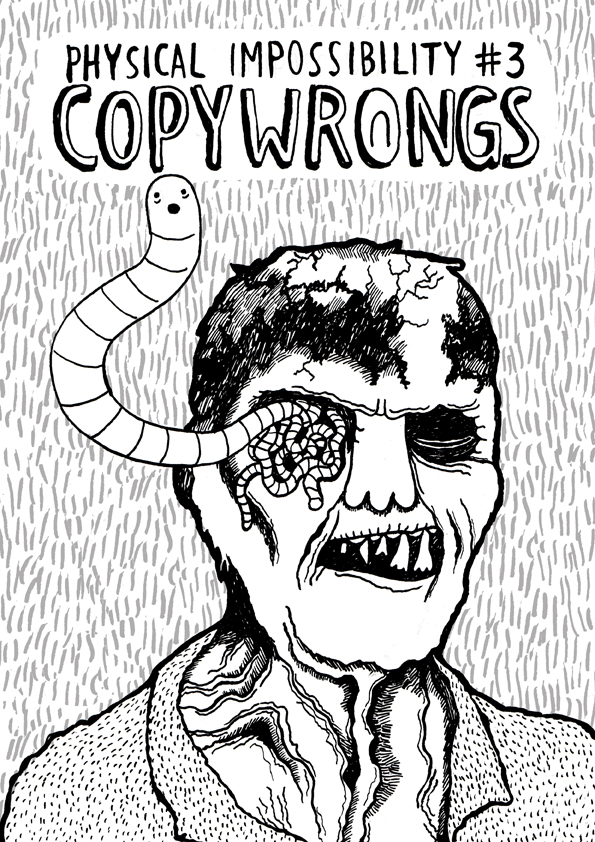
What differentiates Shankar’s films from the official product is a matter of steadily evaporating context. From a long enough distance – whether that’s geographical, temporal or philosophical – it becomes impossible to tell the difference, or understand why it’s even important to. In the pages of Physical Impossibility #3, you’ll find all manner of similar copywrongs, from the undisputed classic of world cinema which by rights should have vanished into ashes to the irrepressible Django and his parade of shades and doppelgangers. In between you’ll find curios of copyright contempt from across time and space of which, happily, there are many more besides.

This article is excerpted from Physical Impossibility #3: Copywrongs, launching 21/05/2015 at The Old Hairdressers, with Matchbox Cineclub’s screening of Turkish Star Wars. Grab a copy at the launch or shortly thereafter at selected retailers or online, here.

Cover_web

Cover of Physical Impossibility #3, by Valpuri Karinen

Posted in Copywrongs, Zine | Tagged , , , , , , | 2 Comments